Sacred geometry reveals patterns that connect art, nature, spirituality, and mathematics into a unified cosmic language that has fascinated civilizations throughout human history. ✨

From the intricate spirals of seashells to the perfect proportions of ancient temples, sacred geometry serves as the blueprint underlying all creation. These mathematical patterns aren’t merely abstract concepts—they’re the fundamental structures that govern everything from atomic particles to galactic formations, offering us a glimpse into the divine architecture of existence.
For thousands of years, mystics, philosophers, architects, and scientists have studied these geometric principles, recognizing them as bridges between the physical and metaphysical realms. Today, as quantum physics and ancient wisdom converge, we’re rediscovering what our ancestors intuitively understood: the universe speaks in shapes, ratios, and harmonious proportions.
🔯 The Foundation: What Is Sacred Geometry?
Sacred geometry refers to the symbolic and sacred meanings attributed to certain geometric shapes, proportions, and patterns. These forms appear repeatedly throughout nature, art, architecture, and spiritual traditions across cultures. Unlike ordinary geometry taught in classrooms, sacred geometry explores the metaphysical significance and energetic properties of these mathematical relationships.
At its core, sacred geometry represents the belief that the Creator designed the universe according to geometric principles. These patterns serve as the organizing framework for all matter and energy, from the microscopic DNA helix to the macroscopic structure of galaxies. Understanding these patterns allows us to perceive the underlying order and intelligence permeating reality.
The study encompasses fundamental shapes like circles, triangles, squares, and spirals, as well as more complex formations such as the Flower of Life, Metatron’s Cube, and the Fibonacci sequence. Each carries specific vibrations and meanings that ancient cultures incorporated into their sacred structures, spiritual practices, and artistic expressions.
🌀 The Fibonacci Sequence: Nature’s Secret Code
Perhaps the most famous example of sacred geometry in action is the Fibonacci sequence, a mathematical pattern where each number equals the sum of the two preceding ones: 0, 1, 1, 2, 3, 5, 8, 13, 21, and so on. This simple progression creates the golden spiral, a shape that appears throughout nature with astonishing consistency.
You’ll find this spiral in the arrangement of sunflower seeds, the curve of nautilus shells, the formation of hurricanes, and even the shape of galaxies. Pine cones, pineapples, rose petals, and romanesco broccoli all display Fibonacci patterns. The human body itself reflects these proportions—the ratio of your forearm to your hand, or the segments of your fingers, approximate the golden ratio of 1.618.
Ancient architects understood this principle intuitively, incorporating the golden ratio into structures like the Pyramids of Giza and the Parthenon. Renaissance masters like Leonardo da Vinci deliberately used these proportions in masterpieces such as the Vitruvian Man, recognizing that these ratios resonate with our inherent sense of beauty and harmony.
Why Does This Pattern Appear Everywhere?
The prevalence of the Fibonacci sequence suggests an underlying efficiency principle in nature. This pattern represents optimal space utilization, allowing maximum growth with minimum energy expenditure. Plants arrange their leaves according to Fibonacci numbers to maximize sun exposure without overshadowing lower leaves. This mathematical efficiency reveals nature’s inherent intelligence.
From a spiritual perspective, the golden spiral represents the journey of consciousness itself—expanding outward from a central point while maintaining connection to the source. It symbolizes growth, evolution, and the unfolding of divine potential within all living systems.
🌸 The Flower of Life: Ancient Symbol of Creation
The Flower of Life stands as one of the most powerful and ancient symbols in sacred geometry. This intricate pattern consists of multiple evenly-spaced, overlapping circles arranged to form a flower-like pattern. The complete symbol contains 19 circles and 36 partial circular arcs, all enclosed within a larger circle.
This symbol has been found carved into temple walls in Egypt, appearing at the Osiris Temple in Abydos dating back thousands of years. It’s also been discovered in locations across the globe—Turkey, Ireland, England, Israel, China, India, and Tibet—suggesting a universal recognition of its significance across diverse cultures and time periods.
Within the Flower of Life, you can find virtually all other sacred geometric patterns, including Metatron’s Cube, the Tree of Life from Kabbalah, the five Platonic solids, and the vesica piscis. This makes it a kind of master template containing the fundamental patterns of space and time.
The Spiritual Significance of the Flower of Life
Many spiritual traditions interpret the Flower of Life as a visual representation of the interconnectedness of all life and consciousness in the universe. Each circle represents a stage in creation, with the overlapping sections symbolizing how all things emerge from the same divine source while maintaining individual expression.
Meditation practitioners use this symbol as a focal point to access deeper states of consciousness, believing it carries specific frequencies that activate dormant potentials within human awareness. Some report experiencing heightened intuition, clarity, and spiritual connection when working with this ancient pattern.
📐 The Platonic Solids: Building Blocks of Reality
The five Platonic solids—tetrahedron, cube, octahedron, dodecahedron, and icosahedron—are three-dimensional geometric forms where all faces are identical regular polygons, and the same number of faces meet at every vertex. These shapes represent the only five ways to construct perfectly symmetrical polyhedra.
The ancient Greek philosopher Plato associated each solid with the classical elements: the tetrahedron with fire, the cube with earth, the octahedron with air, the icosahedron with water, and the dodecahedron with ether or spirit—the divine substance of the heavens and cosmos.
Modern science has validated the significance of these forms. Crystals naturally form in these geometric patterns. The molecular structure of certain viruses assumes icosahedral symmetry. Even the universe’s large-scale structure resembles dodecahedral geometry according to some cosmological models.
Metatron’s Cube: Container of the Sacred Solids
Metatron’s Cube, derived from the Flower of Life, contains all five Platonic solids within its structure. This complex geometric figure consists of 13 circles connected by straight lines, creating a three-dimensional framework that many consider the blueprint of the universe.
Named after the archangel Metatron in Judeo-Christian tradition, this symbol represents the energy and essence that flows from divine source into material creation. Practitioners use it for protection, spiritual activation, and to clear negative energy from spaces and consciousness.
🕉️ Sacred Geometry Across Spiritual Traditions
Every major spiritual and religious tradition incorporates sacred geometric principles into its symbolism, architecture, and practices. This universal presence suggests these patterns tap into fundamental truths about consciousness and reality that transcend cultural boundaries.
In Hinduism and Buddhism, the mandala serves as a sacred geometric diagram representing the cosmos. These intricate circular designs feature repeating patterns radiating from a central point, used as meditation tools to facilitate spiritual journeys toward enlightenment. The Sri Yantra, one of the most revered symbols in Hindu tantra, consists of nine interlocking triangles creating 43 smaller triangles, representing the union of masculine and feminine divine principles.
Islamic art brilliantly expresses sacred geometry through complex tessellating patterns found in mosques worldwide. Since Islamic tradition discourages representational art, geometric patterns became the primary means of expressing the infinite nature of Allah. These intricate designs demonstrate sophisticated mathematical understanding while creating spaces that elevate consciousness.
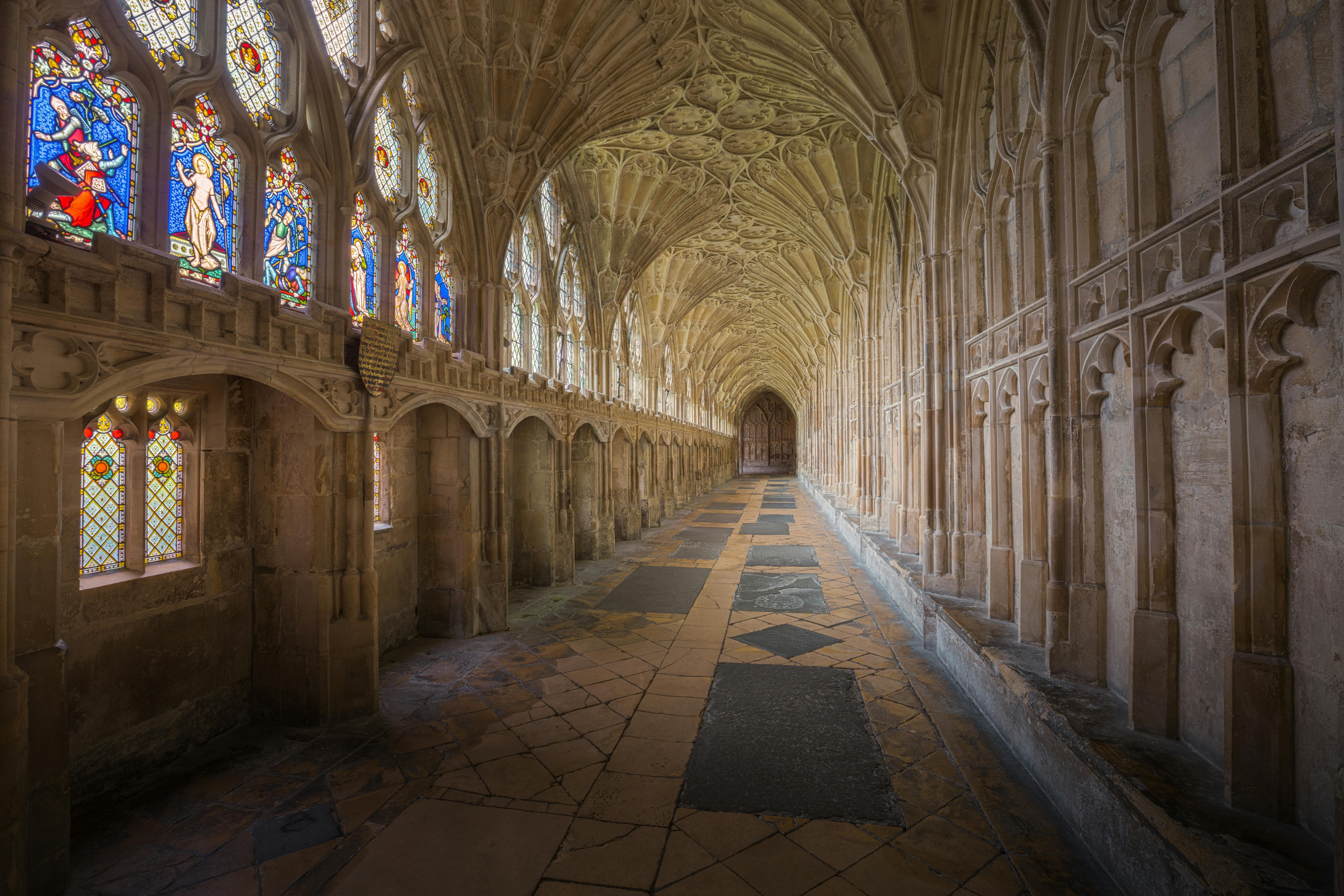
Christian churches, particularly Gothic cathedrals, employ sacred geometry extensively. The rose windows, floor plans, and proportional relationships within these structures follow precise geometric principles designed to lift the human spirit toward divine contemplation. The vesica piscis, formed by two overlapping circles, became a symbol for Christ and appears throughout Christian iconography.
🏛️ Ancient Architecture: Temples to Cosmic Harmony
Ancient civilizations constructed their most important buildings according to sacred geometric principles, believing these structures could serve as conduits between earthly and celestial realms. These weren’t merely aesthetic choices—they represented sophisticated understanding of proportion, harmony, and energetic resonance.
The Great Pyramid of Giza encodes numerous mathematical constants and astronomical relationships within its dimensions. Its base perimeter divided by twice its height yields pi (π) with remarkable accuracy. The pyramid’s orientation aligns precisely with cardinal directions, and its internal chambers correlate with specific stellar configurations. This precision suggests knowledge far beyond what conventional history attributes to ancient Egypt.
Stonehenge, the Mayan pyramids, Angkor Wat, and countless other ancient sites demonstrate similar geometric sophistication. These structures often align with solstices, equinoxes, and significant astronomical events, functioning as celestial calendars while creating sacred spaces that facilitate expanded states of consciousness.
Cymatics: Geometry Made Visible Through Sound
Cymatics—the study of visible sound vibrations—provides tangible evidence of how frequency creates geometric patterns. When sand, water, or particles are placed on vibrating surfaces, they spontaneously organize into intricate symmetric patterns that directly correspond to the frequency of sound waves.
Different frequencies produce different geometric forms, ranging from simple circles to complex mandalas. This phenomenon demonstrates how vibration creates structure, supporting ancient spiritual teachings that sound or “the Word” was the creative force bringing the universe into manifestation. “In the beginning was the Word,” takes on new meaning when we see sound literally creating form.
🧬 Sacred Geometry and Human Consciousness
The human body itself is a living expression of sacred geometry. The DNA double helix forms a perfect golden spiral. The proportions of facial features that we find most attractive typically approximate the golden ratio. The human energy system, described in Eastern traditions as chakras, aligns with geometric patterns and specific frequencies.
Research in neuroscience reveals that geometric visual patterns can produce measurable changes in brain activity. Certain geometric forms induce relaxation, while others enhance focus and alertness. This suggests our consciousness is hardwired to respond to these fundamental patterns, possibly because they reflect the geometric structure of consciousness itself.
Many people report profound experiences when meditating on sacred geometric symbols. These aren’t merely psychological phenomena—they may represent actual resonance between the geometric patterns in our consciousness and the external symbols. This resonance could explain why these forms appear in spiritual visions, near-death experiences, and psychedelic journeys across cultures.
🎨 Practical Applications: Integrating Sacred Geometry
You don’t need to be a mathematician or mystic to benefit from sacred geometry. These principles can be consciously integrated into daily life to create greater harmony, beauty, and spiritual connection.
In personal spaces, incorporating sacred geometric art, patterns, or structures can shift the energetic quality of environments. Many people place crystals in geometric grids to amplify their properties and create specific energetic fields. The simple act of arranging objects according to sacred proportions can create more harmonious and peaceful spaces.
Artists and designers increasingly draw upon sacred geometric principles to create work that resonates on deeper levels. When art incorporates these universal patterns, it speaks to something fundamental in human consciousness, transcending personal preference to touch archetypal recognition.
Meditation and Visualization Practices
Using sacred geometric symbols as meditation focal points provides structure for consciousness exploration. Begin with simple forms like circles or triangles, then progress to more complex patterns like the Flower of Life or Sri Yantra. Visualizing these forms in your mind’s eye or gazing at physical representations can facilitate deeper meditative states.
Some practitioners create sacred geometric grids for manifestation work, placing intentions at specific points within geometric patterns to amplify their creative power. Others use these forms for healing, visualizing geometric light patterns moving through the body to restore balance and harmony.
🌌 The Quantum Connection: Science Meets Spirituality
Modern physics increasingly validates ancient sacred geometric wisdom. Quantum mechanics reveals that at the subatomic level, particles exist as probability waves forming geometric interference patterns. String theory proposes that reality’s fundamental building blocks are tiny vibrating strings whose oscillation patterns create the particles and forces we experience.
The holographic principle in physics suggests that our three-dimensional reality may be a projection from information encoded on a two-dimensional boundary—essentially a geometric encoding of reality. This mirrors ancient spiritual concepts of the material world as a projection of higher-dimensional patterns.
Fractal geometry, developed by mathematician Benoit Mandelbrot, demonstrates self-similar patterns repeating at different scales—precisely what sacred geometry has always shown. Coastlines, mountain ranges, cloud formations, blood vessels, and neural networks all exhibit fractal characteristics, revealing the same geometric principles operating from the microscopic to cosmic scales.
💫 Awakening to the Cosmic Blueprint
Sacred geometry offers more than intellectual understanding—it provides a direct experiential path to recognizing the unity underlying apparent diversity. When you perceive these patterns in nature, art, and architecture, you’re witnessing the visible expression of invisible organizing principles that structure all existence.
This recognition naturally leads to expanded consciousness. You begin seeing interconnections rather than separate objects, patterns rather than chaos, intelligence rather than randomness. The world transforms from a collection of disconnected things into a unified field of consciousness expressing itself through infinite geometric variations.
Engaging with sacred geometry awakens dormant capacities within your awareness. These patterns serve as keys unlocking deeper perception, activating what ancient traditions called the “third eye”—the intuitive faculty that perceives beyond ordinary sensory limitations. This isn’t mystical fantasy but practical reality available to anyone willing to look beyond surface appearances.
🌟 Your Journey Into Sacred Patterns
Beginning your exploration of sacred geometry requires only curiosity and attention. Start observing geometric patterns in nature during daily walks—notice spiral arrangements in flowers, branching patterns in trees, hexagonal honeycombs, and symmetrical snowflakes. This trains your awareness to recognize these universal templates.
Study the classical sacred geometric symbols, learning their construction and contemplating their meanings. Draw them yourself, as the act of creating these forms with your own hands establishes a deeper relationship with their energies. Many find this practice meditative, calming the mind while simultaneously activating higher perceptual capacities.
Explore how different cultures expressed sacred geometric wisdom through their architecture, art, and spiritual practices. This reveals how humanity across time and space independently recognized these same fundamental patterns, suggesting their objective reality rather than cultural construction.
Most importantly, approach sacred geometry with both intellectual curiosity and intuitive openness. Let the patterns speak to your consciousness directly, beyond conceptual understanding. These forms carry information that bypasses ordinary cognitive processing, communicating directly with deeper aspects of your being.
Sacred geometry reveals that the universe isn’t a random accident but an intelligently designed masterpiece expressing itself through mathematical precision and aesthetic beauty. These patterns form the language through which the cosmos communicates its deepest secrets, inviting us to read its sacred text written in circles, spirals, and symmetries. As you attune to this geometric language, you’ll discover yourself not as separate from creation but as an integral expression of its fundamental patterns—consciousness recognizing itself in the mirror of mathematical perfection.