
Ancient civilizations encoded infinite complexity into their art through patterns that modern mathematics would later identify as fractals, revealing a profound understanding of nature’s geometric language.

🌀 The Hidden Mathematics of Ancient Creativity
When we examine the intricate designs adorning ancient temples, pottery, and textiles, we often marvel at their beauty without recognizing the sophisticated mathematical principles embedded within them. Fractal geometry—a branch of mathematics that describes self-similar patterns repeating at different scales—appears throughout ancient art worldwide, long before Benoit Mandelbrot coined the term “fractal” in 1975.
These recursive patterns suggest that ancient artisans possessed an intuitive grasp of complex mathematical concepts, observing and replicating the fundamental structures found in nature. From the spiral patterns in Celtic knotwork to the recursive architecture of African villages, fractal designs served both aesthetic and symbolic purposes across diverse cultures.
Understanding Fractals: Nature’s Blueprint in Human Hands
Fractals are geometric patterns that exhibit self-similarity across different scales. When you zoom into a fractal pattern, you discover similar structures repeating infinitely. This property mirrors countless natural phenomena: the branching of trees, the structure of river networks, the formation of coastlines, and the arrangement of leaves on stems.
Ancient artists didn’t need computers or mathematical equations to create fractal patterns. Instead, they developed iterative techniques—repeating simple processes to generate complex designs. This approach allowed them to capture the essence of natural forms through systematic repetition and scaling.
The Mathematical Properties Behind the Beauty
Fractal patterns in ancient art typically demonstrate three key characteristics: self-similarity, where parts resemble the whole; infinite complexity, achieved through iterative repetition; and fractional dimensions that exist between traditional geometric dimensions. These properties create visual harmony that resonates deeply with human perception, perhaps because our brains evolved to recognize and interpret natural patterns.
🏛️ African Architecture: Villages as Living Fractals
African traditional settlements provide some of the most striking examples of fractal architecture. The Ba-ila settlements of southern Zambia demonstrate fractal scaling across multiple levels: individual houses form rings, these rings cluster into family compounds, and compounds organize into larger village structures—each level replicating the circular pattern at different scales.
Research by mathematician Ron Eglash revealed that this fractal organization wasn’t accidental but represented intentional design reflecting social hierarchies and cosmological beliefs. The recursive patterns encoded information about family relationships, social status, and spiritual concepts within the physical layout of communities.
The Sacred Geometry of Ethiopian Churches
The rock-hewn churches of Lalibela in Ethiopia incorporate fractal patterns in their crosses and architectural details. The Ethiopian cross itself exhibits self-similar branching, with each arm subdividing into smaller versions of the same pattern. This design philosophy extends to window lattices, wall decorations, and floor plans, creating spaces that feel simultaneously grounded and transcendent.
Mandala Traditions: Circular Infinities Across Cultures
Mandalas represent perhaps the most universally recognized fractal art form in ancient traditions. These circular designs, found in Hindu, Buddhist, and Native American cultures, employ radial symmetry with repeating patterns that draw the eye inward through multiple scales of detail.
Tibetan sand mandalas demonstrate extraordinary complexity, with monks creating intricate patterns that repeat from the center outward. Each section contains miniature versions of the overall design, embodying the Buddhist concept of the universe within a grain of sand. The painstaking creation process—often taking weeks—and the ritual destruction afterwards reflect philosophical teachings about impermanence and attachment.
Native American Medicine Wheels and Sand Paintings
Navajo sand paintings utilize fractal-like repetition in their healing ceremonies. These temporary artworks feature geometric patterns that radiate from central points, with symbolic elements repeated at various scales throughout the design. The Hopi culture’s petroglyphs also display spiral patterns and recursive symbols that mirror natural formations observed in their desert environment.
🌊 Celtic Knotwork: Infinite Loops and Sacred Continuity
Celtic art from the Iron Age through the medieval period showcases elaborate interlacing patterns that exhibit fractal characteristics. These knots, spirals, and labyrinths create the illusion of infinite pathways with no beginning or end—a visual metaphor for eternity and the interconnectedness of life.
The Book of Kells, an illuminated manuscript created around 800 CE, contains some of the most sophisticated Celtic fractal designs. Microscopic details reveal that patterns considered complex at normal viewing distances contain even more intricate designs when examined closely. Artists worked with tools allowing precision measured in fractions of millimeters, creating self-similar patterns across multiple scales.
Spirals in Megalithic Stone Carvings
The triple spiral at Newgrange in Ireland, dating to approximately 3200 BCE, predates the pyramids of Giza. This Neolithic carving demonstrates an understanding of logarithmic spirals—curves that maintain consistent proportions as they expand. Similar spiral motifs appear throughout Celtic territories, from Scotland to Brittany, suggesting shared symbolic significance and mathematical intuition.
Islamic Geometric Art: Mathematics Made Visible ✨
Islamic art represents one of history’s most mathematically sophisticated artistic traditions. Constrained by religious prohibitions against representational imagery, Islamic artists developed extraordinary geometric patterns that transform mathematical concepts into visual poetry.
The Alhambra palace in Granada, Spain, showcases fractal-like tessellations where complex patterns emerge from simple repeated shapes. These designs demonstrate all seventeen possible wallpaper groups—mathematical classifications that wouldn’t be formally described until the 19th century. The artists achieved this through practical geometry rather than theoretical mathematics, using compass and straightedge to create patterns of stunning complexity.
Muqarnas: Three-Dimensional Fractal Architecture
Muqarnas structures—elaborate honeycomb-like ceiling decorations found in Islamic architecture—represent three-dimensional fractal patterns. These architectural elements feature cells that subdivide into smaller similar cells, creating surfaces that seem to dissolve into infinite detail. The mathematical sophistication required to design and construct these structures demonstrates advanced geometric knowledge.
Mesoamerican Pyramids and Recursive Architecture
Mesoamerican cultures built pyramids and temples incorporating fractal principles in their construction. The Maya pyramid of Kukulkan at Chichen Itza demonstrates self-similar proportions, with staircases and terraces reflecting smaller versions of the overall structure. This recursive architecture created visual harmony and encoded astronomical and calendrical information.
Maya textile patterns also exhibit fractal characteristics, with diamond shapes containing smaller diamonds, and border patterns that repeat at different scales. These designs weren’t merely decorative but communicated social status, regional identity, and mythological narratives through their geometric language.
Aztec Stone Carvings and the Calendar Stone
The famous Aztec Sun Stone displays concentric circles filled with intricate carvings that demonstrate self-similar scaling. Each ring contains symbols and patterns that relate to the overall cosmological design, creating layers of meaning accessible at different levels of interpretation. This fractal organization reflects the Aztec worldview of nested time cycles and interconnected cosmic forces.
🎨 Asian Art Traditions: Mountains, Clouds, and Infinite Detail
Chinese landscape painting developed techniques for representing natural fractal patterns centuries before Western art embraced similar approaches. Artists used brushstrokes that repeated at different scales to depict mountains, trees, and water—capturing the self-similar nature of these landscape features.
The concept of “borrowed scenery” in Chinese garden design creates fractal-like experiences where views frame smaller views, each revealing similar compositional principles. This recursive aesthetic extends to decorative arts, where porcelain patterns and silk embroidery often feature motifs that repeat with variations across the design field.
Japanese Seigaiha and Wave Patterns
The traditional Japanese seigaiha pattern—overlapping semi-circles resembling waves—demonstrates fractal characteristics through its rhythmic repetition and scalability. This ancient design appears on textiles, ceramics, and architectural elements, creating visual movement through simple geometric iteration. The pattern’s enduring popularity reflects its mathematical elegance and natural resonance.
The Neuroscience Behind Fractal Appreciation
Modern research reveals why fractal patterns in ancient art resonate so deeply with viewers. Studies using eye-tracking technology and brain imaging show that humans prefer fractals with specific dimension ranges—particularly those between 1.3 and 1.5—which correspond to patterns prevalent in natural environments where humans evolved.
When viewing fractal patterns, our visual cortex processes information more efficiently, creating a sense of ease and pleasure. This physiological response explains why ancient artists across cultures independently developed similar fractal approaches—these patterns simply feel right to human perception. The stress-reducing effects of viewing fractal patterns have been measured scientifically, validating the meditative and healing properties attributed to mandala contemplation and similar practices in various traditions.
🔍 Modern Rediscovery and Digital Analysis
Contemporary researchers use computer analysis to reveal fractal dimensions in ancient artworks that aren’t immediately apparent to the eye. Box-counting methods and other mathematical techniques quantify the fractal nature of historical designs, often confirming suspicions about intentional mathematical sophistication in their creation.
This digital archaeology provides new appreciation for ancient artistic achievements. Patterns that appeared merely decorative reveal underlying mathematical structures, suggesting that aesthetic intuition and mathematical reasoning weren’t separate domains for ancient artists but integrated aspects of creative practice.
Applications in Contemporary Design
Understanding fractal patterns in ancient art influences modern design across multiple fields. Architects incorporate fractal principles for more harmonious buildings, textile designers revive traditional patterns with new appreciation for their mathematical properties, and urban planners study traditional settlements for sustainable community design principles. The ancient wisdom embedded in these patterns offers solutions to contemporary challenges in creating human-centered, environmentally responsive designs.
Practical Techniques: How Ancient Artists Created Fractals
Ancient artisans developed practical methods for generating fractal patterns without mathematical formulas. These iterative techniques included:
- Compass and straightedge constructions: Using basic geometric tools to create patterns through systematic subdivision and repetition
- String and stake methods: Large-scale geometric constructions for architectural layouts using ropes to create consistent proportions
- Template repetition: Carving or stamping tools that reproduced basic units, which were then arranged in self-similar configurations
- Folding and cutting: Paper-cutting traditions that generate symmetric fractal patterns through folded media
- Recursive algorithms: Step-by-step processes passed through apprenticeship, describing how to subdivide and elaborate patterns
These techniques allowed artists without formal mathematical training to create designs exhibiting sophisticated fractal properties. The methods were accessible yet powerful, enabling complex results from simple repeated actions—the essence of fractal generation.
🌍 Universal Patterns: Convergent Evolution in Art
The appearance of similar fractal patterns across geographically isolated cultures suggests either universal human cognitive tendencies or independent observation of natural patterns. Spirals, branching structures, and nested geometries appear in African, Asian, European, and American indigenous art, despite no historical contact between these civilizations during their development.
This convergent evolution in artistic expression indicates that fractal patterns represent fundamental aspects of human visual processing and aesthetic preference. Ancient artists worldwide discovered that these patterns conveyed meaning, created visual interest, and resonated with viewers in profound ways—knowledge that modern neuroscience now confirms through empirical research.
Preserving and Revitalizing Ancient Fractal Traditions
Many traditional art forms incorporating fractal patterns face challenges from modernization and cultural change. Indigenous communities worldwide work to preserve these artistic traditions, recognizing them as repositories of mathematical knowledge, cultural identity, and aesthetic wisdom.
Digital documentation projects use photography, 3D scanning, and mathematical analysis to record ancient fractal artworks before they deteriorate. These initiatives create archives that support both preservation and education, allowing new generations to study and appreciate the sophisticated mathematical artistry of their ancestors.
Contemporary artists blend traditional fractal techniques with modern tools, creating works that honor ancestral knowledge while exploring new possibilities. This cultural continuity ensures that the wisdom encoded in ancient fractal art continues evolving rather than becoming merely historical curiosities.
💫 The Enduring Legacy of Ancient Mathematical Artistry
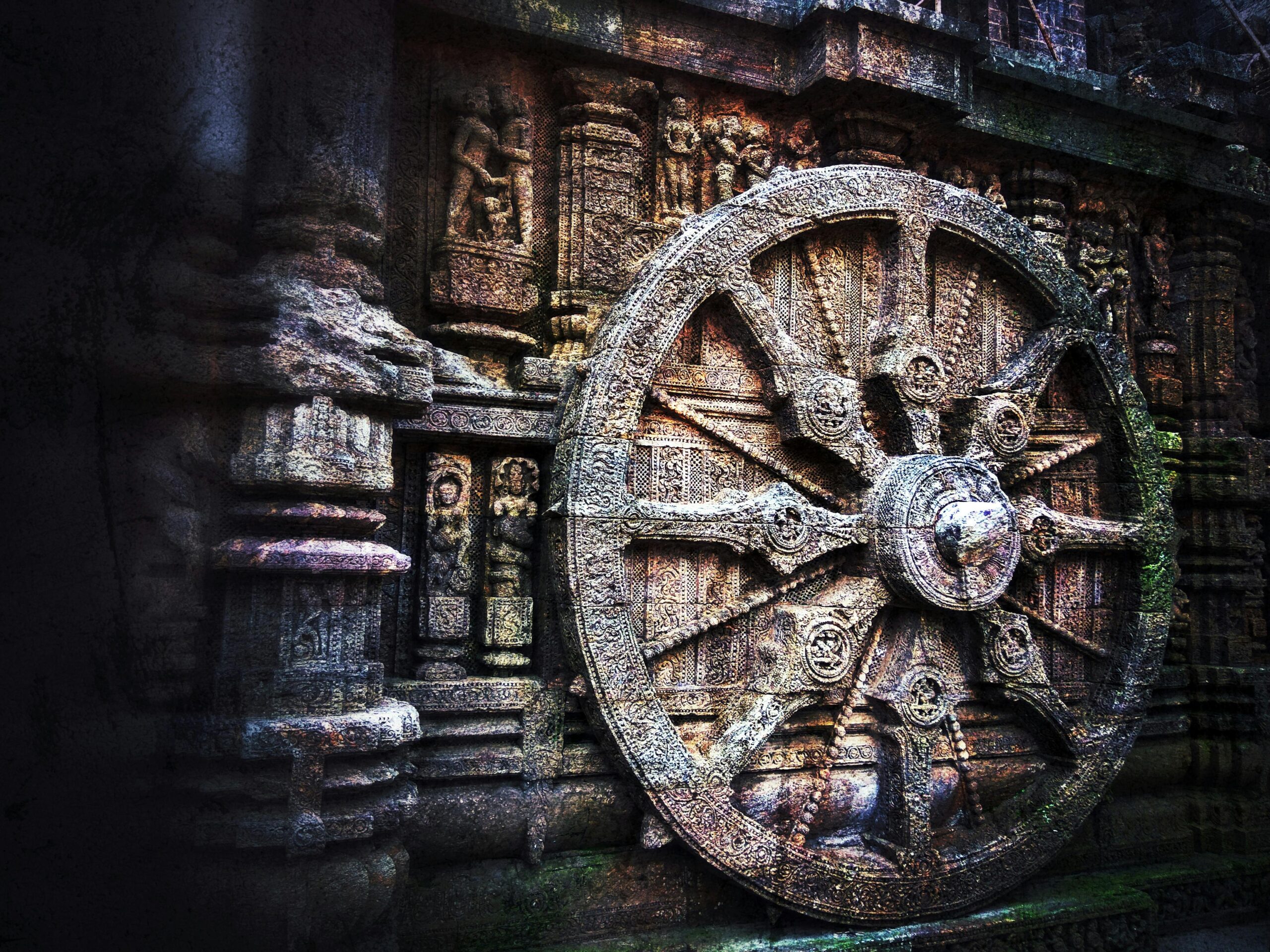
The fractal patterns adorning ancient art and architecture represent far more than aesthetic choices. They embody profound observations about nature’s structure, sophisticated mathematical intuition, and the universal human capacity for abstract pattern recognition. These designs connected ancient peoples to the geometric principles underlying reality itself.
By recognizing and studying fractal patterns in ancient art, we gain not only appreciation for historical achievements but also practical knowledge applicable to contemporary challenges. The recursive thinking that generated these patterns offers models for sustainable design, efficient information organization, and harmonious integration of human creations with natural systems.
The mystique surrounding ancient fractal art dissolves into something even more remarkable: evidence of humanity’s longstanding dialogue with mathematics, nature, and beauty. These patterns remind us that our ancestors possessed sophisticated knowledge encoded in visual forms, waiting for modern understanding to fully appreciate their depth and significance. As we continue exploring these ancient designs, we discover that the past speaks to the present in the universal language of pattern, proportion, and recursive beauty.