
Ancient civilizations mastered hydraulic engineering with remarkable sophistication, creating water systems that continue to inspire modern engineers and demonstrate timeless ingenuity across continents.

💧 The Dawn of Water Mastery in Ancient Civilizations
Long before electricity powered our modern world, ancient societies harnessed the fundamental force of water to drive their technological advancement. These early engineers understood that controlling and channeling water meant controlling the very lifeblood of civilization. From the terraced rice paddies of ancient China to the elaborate aqueducts of Rome, hydraulic energy shaped the destiny of empires and transformed landscapes in ways that still resonate today.
The story of ancient hydraulic engineering is not merely about moving water from one place to another. It represents humanity’s first systematic attempts to harness renewable energy, solve complex mathematical problems, and create sustainable infrastructure that could serve populations for centuries. These systems required deep understanding of physics, geology, mathematics, and social organization—a multidisciplinary approach that modern engineers would recognize and respect.
🏛️ Mesopotamia: Where Hydraulic Innovation Began
The cradle of civilization between the Tigris and Euphrates rivers witnessed some of humanity’s earliest experiments with water control. The Sumerians, Akkadians, and Babylonians developed sophisticated irrigation systems as early as 6000 BCE, transforming arid landscapes into agricultural paradises that could support dense urban populations.
These ancient Mesopotamian engineers constructed intricate networks of canals, dikes, and reservoirs that regulated seasonal flooding and distributed water across vast agricultural zones. The qanat system, which originated in ancient Persia around 1000 BCE, represented a particularly ingenious solution to water scarcity. These underground channels transported water from mountain aquifers to lowland settlements through gravity alone, minimizing evaporation losses in the desert heat.
Archaeological evidence reveals that Mesopotamian hydraulic systems incorporated gates, locks, and flow regulators that allowed precise control over water distribution. The Code of Hammurabi, one of history’s oldest legal documents, contained multiple provisions governing water rights and irrigation maintenance, demonstrating how central hydraulic infrastructure was to societal organization.
⚙️ Roman Aqueducts: Engineering Marvels That Defined an Empire
The Romans elevated hydraulic engineering to unprecedented heights, constructing aqueduct systems that supplied millions of citizens with clean water across a vast empire. At its peak, Rome itself was served by eleven major aqueducts delivering approximately 300 gallons of water per capita daily—a figure that rivals modern cities.
These monumental structures combined architectural beauty with engineering precision. Roman engineers calculated gradients with remarkable accuracy, maintaining slopes of just 1:4800 over distances spanning dozens of miles. The Aqua Claudia, completed in 52 CE, stretched nearly 45 miles and incorporated underground conduits, elevated arcades, and innovative pressure systems to navigate diverse terrain.
Beyond simple water transport, Roman aqueducts powered a hydraulic civilization. Public baths, fountains, mills, and even sophisticated sewage systems depended on steady water flow. The Romans developed pressure pipes made of lead and bronze, allowing water to travel uphill through siphons—a technique that anticipated modern hydraulic principles by nearly two millennia.
The Engineering Principles Behind Roman Water Systems
Roman hydraulic engineers employed several key principles that remain relevant today. They understood the relationship between elevation, pressure, and flow rate, using settling tanks to reduce water velocity and remove sediments. Distribution networks incorporated sophisticated valve systems and overflow mechanisms that prevented damage during high-flow conditions.
The Romans also pioneered the use of standardized measurements for water rights, creating the “quinaria”—a unit based on pipe diameter that determined how much water various users could draw. This systematic approach to resource allocation represented an early form of hydraulic management that balanced competing demands across urban populations.
🌊 Greek Innovations: Philosophy Meets Practical Hydraulics
Ancient Greek engineers and philosophers made fundamental discoveries about water behavior that laid theoretical foundations for hydraulic science. Archimedes’ principle of buoyancy, discovered in the 3rd century BCE, explained how objects interact with fluids and influenced ship design, pumping mechanisms, and water-lifting devices.
The Archimedes screw, still used in modern applications, exemplifies Greek hydraulic ingenuity. This helical device could efficiently raise water from lower to higher elevations, revolutionizing irrigation, drainage, and mining operations. Its elegant simplicity required no external power source beyond human or animal effort, making it accessible to communities across the Mediterranean world.
Greek engineers also developed the first hydraulic clock, or clepsydra, using controlled water flow to measure time with impressive accuracy. These devices incorporated sophisticated mechanisms including siphons, valves, and gearing systems that anticipated later mechanical innovations. The Tower of the Winds in Athens, built in the 1st century BCE, housed elaborate water clocks that served both practical and ceremonial purposes.
🏔️ Asian Hydraulic Mastery: Rice Terraces and Canal Networks
Ancient Asian civilizations developed hydraulic systems uniquely adapted to monsoon climates and mountainous terrain. The rice terraces of China, the Philippines, and Southeast Asia represent some of the world’s most extensive and sustainable hydraulic agricultural systems, some dating back over 2,000 years.
These terraced landscapes function as enormous hydraulic machines, capturing rainfall and managing water distribution across thousands of individual plots. Stone walls, careful grading, and irrigation channels work together to prevent erosion, conserve moisture, and maximize agricultural productivity on impossibly steep slopes. The Banaue Rice Terraces in the Philippines extend across approximately 4,000 square miles of mountain terrain, demonstrating engineering on a landscape scale.
Chinese engineers developed the Grand Canal, the world’s longest artificial waterway, beginning in the 5th century BCE and expanding over subsequent dynasties. This massive project connected major river systems, facilitating internal trade and demonstrating sophisticated understanding of water management, lock systems, and canal construction across varied topography.
The Hydraulic Empire Theory
Historian Karl Wittfogel proposed that societies requiring large-scale irrigation systems developed centralized bureaucratic structures to manage these complex hydraulic works. While debated by scholars, this theory highlights how water management influenced political organization, social hierarchies, and economic development in ancient civilizations from Egypt to China.
🌴 The Ingenious Water Systems of South America
Pre-Columbian civilizations in South America developed remarkable hydraulic technologies adapted to diverse environments from coastal deserts to high-altitude plateaus. The Nazca culture of ancient Peru constructed underground aqueducts called “puquios” that tapped subterranean water sources and distributed them to agricultural areas in one of Earth’s driest regions.
The Inca Empire engineered extensive hydraulic systems throughout the Andes Mountains, including sophisticated urban water supplies, agricultural terraces, and ceremonial fountains. At Machu Picchu, engineers created an elaborate water distribution network that included natural springs, carved channels, and precisely constructed fountains that continue functioning after more than 500 years.
These systems demonstrated advanced understanding of hydrology, geology, and topography. Inca engineers calculated water flow rates, designed drainage to prevent landslides, and constructed channels with gradients optimized for consistent supply. The use of finely cut stone for water channels minimized friction and prevented leakage, ensuring efficient transport across significant distances and elevation changes.
🔧 Ancient Hydraulic Machines and Power Generation
Beyond water transport and irrigation, ancient engineers developed machines that converted hydraulic energy into mechanical work. Water wheels appeared in various civilizations around the 3rd century BCE, transforming rotational energy from flowing water into power for grinding grain, sawing wood, and crushing ore.
The Romans deployed water wheels extensively throughout their empire, establishing industrial complexes where multiple wheels operated in parallel or series arrangements. The Barbegal mill complex in southern France featured 16 water wheels arranged in sequence, producing an estimated 4.5 tons of flour daily—sufficient to feed a city of 40,000 people.
Ancient metallurgists used hydraulic power to operate bellows for smelting furnaces and trip-hammers for metalworking. These applications of water power anticipated the Industrial Revolution by over a millennium, demonstrating that renewable energy sources could drive significant industrial production without fossil fuels.
The Physics of Ancient Water Power
Ancient engineers intuitively grasped principles that modern physics would later formalize. They understood that water’s potential energy, determined by elevation, could convert to kinetic energy as it descended. By controlling flow rates and optimizing wheel designs, they maximized power output for various applications.
Different water wheel configurations—undershot, overshot, and breastshot—emerged to suit specific conditions. Overshot wheels, where water poured onto the wheel from above, achieved efficiencies approaching 70 percent, comparable to many modern renewable energy systems. This efficiency came from clever design that utilized both water weight and flow momentum.
💎 Mining and Hydraulic Technology
Ancient miners employed hydraulic power for multiple purposes, from drainage to ore processing. Roman gold mines in Spain utilized enormous water wheels and Archimedes screws to remove groundwater from deep shafts, enabling extraction operations that would otherwise be impossible.
The Romans also pioneered “hushing,” a hydraulic mining technique where massive volumes of water were suddenly released to erode hillsides and expose mineral deposits. This dramatic method required constructing reservoirs, aqueducts, and control systems in remote mountainous regions, demonstrating how hydraulic expertise extended to specialized industrial applications.
In ancient China, brine extraction for salt production relied on deep wells and bamboo piping systems that functioned under hydraulic pressure. These systems incorporated sophisticated drilling techniques, pressure management, and distribution networks that prefigured modern petroleum extraction methods by centuries.
🏺 Water Lifting Devices: Overcoming Gravity Through Ingenuity
Ancient civilizations developed numerous devices to raise water against gravity for irrigation, urban supply, and drainage. The shaduf, appearing in ancient Egypt around 2000 BCE, used a counterweighted lever to lift water from rivers and canals with minimal effort. This simple but effective tool remains in use in some regions today.
The noria, a large water wheel with buckets attached to its rim, appeared throughout the Middle East and Mediterranean. As the wheel rotated in flowing water, buckets filled on the downward side and emptied into elevated channels on the upward side. Some norias achieved impressive heights, lifting water over 30 feet to supply elevated settlements and agricultural terraces.
The chain pump, developed in ancient China, consisted of an endless chain with plates or disks that lifted water through a tube. This device could raise substantial volumes to moderate heights and was particularly effective for irrigation and drainage projects. Its modular design allowed multiple units to work in series for greater lift heights.
🌍 Legacy and Modern Applications
The hydraulic systems of antiquity provide more than historical curiosity—they offer practical lessons for contemporary challenges. As modern societies grapple with water scarcity, climate change, and sustainable energy, ancient solutions gain renewed relevance.
Many ancient hydraulic structures continue functioning after millennia, testament to sound engineering principles and quality construction. The qanat systems of Iran still supply water to communities across arid regions. Roman aqueduct remnants continue carrying water in parts of Europe. These enduring systems demonstrate that properly designed hydraulic infrastructure can provide sustainable service across generations.
Contemporary engineers are rediscovering ancient techniques for modern applications. Green building designers incorporate passive water cooling systems inspired by ancient Persian wind towers and hydraulic mechanisms. Sustainable agriculture movements look to traditional irrigation methods that conserve water while maintaining productivity. Micro-hydroelectric systems revive ancient water wheel principles, generating renewable electricity for off-grid communities.
Lessons for Contemporary Water Management
Ancient hydraulic systems succeeded because they worked with natural water cycles rather than against them. They utilized gravity, topography, and seasonal patterns to minimize energy inputs while maximizing functionality. Modern water infrastructure, often dependent on energy-intensive pumping and treatment, could benefit from incorporating these time-tested principles.
The sustainability of ancient systems also derived from their social dimensions. Communities maintained and protected hydraulic infrastructure because their survival depended on it. This collective stewardship model offers insights for modern water governance, where fragmented ownership and short-term thinking often undermine long-term sustainability.
⚡ Bridging Past and Future: Hydraulic Innovation Continues
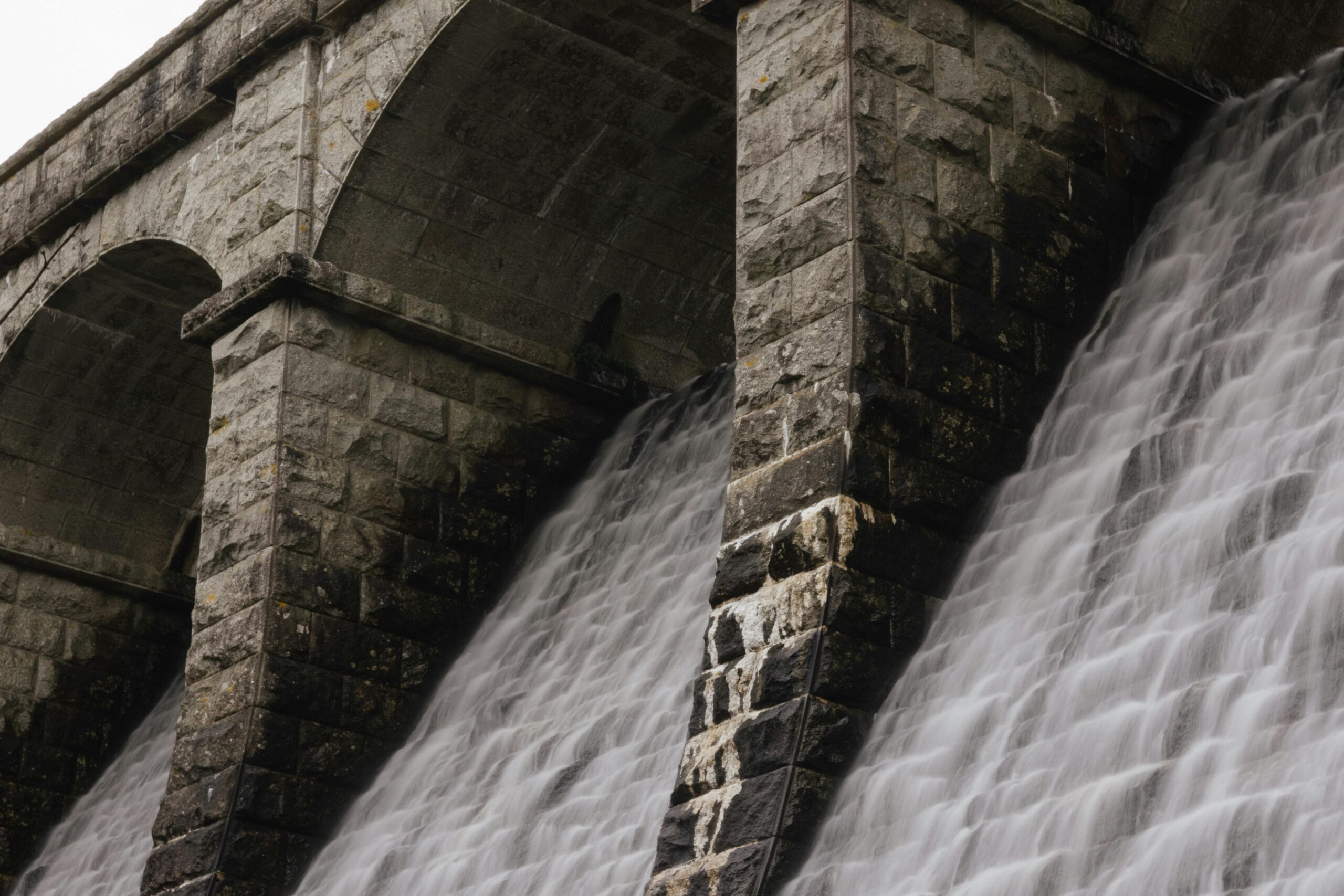
The journey from ancient hydraulic systems to modern water infrastructure reveals continuous innovation built upon foundational principles discovered millennia ago. Today’s hydroelectric dams, pumped storage facilities, and tidal energy systems represent sophisticated elaborations of concepts first explored by ancient engineers who recognized water’s transformative power.
Archaeological research continues uncovering new evidence of ancient hydraulic sophistication. Recent excavations have revealed complex pressure pipe systems, sophisticated valve mechanisms, and calculation methods that demonstrate theoretical understanding rivaling modern hydraulic engineering. These discoveries challenge assumptions about technological progress and suggest that innovation often involves rediscovering forgotten wisdom.
As global water challenges intensify, the ingenious solutions developed by ancient civilizations provide inspiration and practical guidance. Their emphasis on sustainability, efficiency, and working harmoniously with natural systems offers an alternative to purely technological approaches that often create as many problems as they solve.
The power of ancient hydraulic energy lies not just in the impressive structures and systems that survive today, but in the enduring principles they embody. These civilizations understood that water management required integrating technical knowledge with social organization, environmental awareness with economic development, and short-term needs with long-term sustainability. By studying and learning from their achievements, modern societies can develop water and energy systems that serve humanity while respecting planetary boundaries—a goal as relevant today as it was thousands of years ago when engineers first began their remarkable journey of hydraulic innovation.