
Long before modern telescopes and computers, ancient civilizations were already mapping the heavens with remarkable precision, creating astronomical instruments that continue to amaze scientists today.

The ingenuity of early engineers manifests itself most profoundly in the sophisticated astronomical devices they constructed thousands of years ago. These instruments were not merely tools for timekeeping or agricultural planning—they were revolutionary technological achievements that demonstrated a profound understanding of mathematics, geometry, and celestial mechanics. From the mysterious Antikythera Mechanism to the towering observatories of ancient Mesopotamia, these creations reveal that our ancestors possessed knowledge and skills far more advanced than many previously believed.
🌟 The Antikythera Mechanism: Ancient Greece’s Cosmic Computer
Discovered in a shipwreck off the Greek island of Antikythera in 1901, this bronze device has been called the world’s first analog computer. Dating back to approximately 100 BCE, the Antikythera Mechanism was a complex geared instrument capable of predicting astronomical positions and eclipses decades in advance.
The mechanism contained at least 30 bronze gears housed in a wooden frame roughly the size of a shoebox. Its sophistication was unparalleled, with differential gearing that wouldn’t be seen again in Europe until the 16th century. The device could track the cycles of the Solar System, including the irregular orbit of the Moon, and displayed the positions of the Sun, Moon, and possibly the five known planets of ancient times.
Modern researchers using X-ray computed tomography and high-resolution surface scanning have revealed inscriptions functioning as an instruction manual, describing the cosmos as understood by ancient Greeks. The mechanism featured multiple dials showing various astronomical phenomena, including the Metonic cycle of 19 years, the Callippic cycle of 76 years, and even the four-year cycle of the ancient Olympic Games.
Engineering Marvel Beyond Its Time
What makes the Antikythera Mechanism particularly extraordinary is the precision of its manufacturing. The gears were cut with remarkable accuracy, and the calculations encoded in their ratios demonstrate sophisticated mathematical knowledge. The device incorporated epicyclic gearing to model the Moon’s elliptical orbit, a concept that reflects Hipparchus’s lunar theory developed around the same period.
The mechanism’s existence raises profound questions about ancient technological continuity. If such advanced devices existed in ancient Greece, what other sophisticated instruments might have been lost to history? The gap between this technology and subsequent European developments suggests a significant loss of knowledge during various historical upheavals.
🏛️ Mesopotamian Ziggurats: The First Observatories
The ancient civilizations of Mesopotamia—the Sumerians, Babylonians, and Assyrians—were meticulous astronomers who constructed massive stepped pyramids called ziggurats that doubled as astronomical observation platforms. These structures, built as early as 3000 BCE, provided elevated vantage points for observing celestial phenomena.
Babylonian astronomers developed mathematical astronomy, creating the first systematic records of celestial movements. They tracked the positions of planets, identified constellations, and predicted lunar eclipses with surprising accuracy. Their astronomical diaries, written on clay tablets, recorded observations spanning centuries and formed the foundation for later Greek astronomical developments.
Mathematical Precision in Ancient Calculations
The Babylonians developed a sophisticated sexagesimal (base-60) number system that we still use today for measuring time and angles. This system allowed them to perform complex calculations and create astronomical tables predicting planetary positions. The MUL.APIN tablets, dating to around 1000 BCE, contain extensive lists of stars and constellations along with information about rising times and the calendar.
One remarkable achievement was their ability to predict lunar eclipses using the Saros cycle, an 18-year period after which eclipses repeat in similar patterns. This discovery required generations of careful observation and record-keeping, demonstrating the continuity of scientific tradition in ancient Mesopotamia.
🔆 Stonehenge: Britain’s Neolithic Calendar
Perhaps no ancient astronomical instrument captures the imagination quite like Stonehenge. This prehistoric monument in Wiltshire, England, constructed between 3000 and 2000 BCE, functions as a sophisticated astronomical observatory and calendar aligned with solar and lunar cycles.
The monument’s primary axis aligns with the summer solstice sunrise and winter solstice sunset, suggesting its builders possessed precise knowledge of the Sun’s annual path. The arrangement of stones also tracks lunar movements, with some researchers identifying connections to the 18.6-year lunar standstill cycle.
Recent archaeological evidence suggests Stonehenge was part of a larger ceremonial landscape with astronomical significance. The Heel Stone, positioned outside the main circle, marks the midsummer sunrise when viewed from the center of the monument. This alignment would have been even more precise 4,000 years ago due to changes in Earth’s axial tilt.
Engineering Feat of Prehistoric Britain
The construction of Stonehenge represents an extraordinary engineering achievement. The massive sarsen stones, weighing up to 25 tons each, were transported from Marlborough Downs about 20 miles away. The smaller bluestones came from the Preseli Hills in Wales, over 150 miles distant, requiring either tremendous effort in land transport or sophisticated maritime transportation.
The precision of the stone placement demonstrates advanced surveying knowledge. The monument incorporates geometric principles, with the inner horseshoe and outer circle displaying careful planning and mathematical understanding. This level of coordination required not just technical knowledge but also complex social organization.
🌙 Ancient Egyptian Astronomical Instruments and Temples
The ancient Egyptians developed several sophisticated astronomical instruments and aligned their temples with remarkable celestial precision. Their understanding of astronomy was intimately connected to their religious beliefs and practical needs like predicting the annual Nile flood.
The merkhet, an instrument dating to at least 600 BCE, consisted of a bar with a plumb bob used in conjunction with a sighting tool to establish north-south lines and track star movements. This device allowed Egyptian astronomers to align pyramids and temples with cardinal directions and specific celestial objects.
Temple Alignments and Solar Architecture
Many Egyptian temples feature precise astronomical alignments. The Temple of Karnak aligns with the winter solstice sunrise, while Abu Simbel’s main temple is oriented so that twice yearly, sunlight penetrates the sanctuary to illuminate statues of the gods. These solar events occurred near the pharaoh’s birthday and coronation anniversary, demonstrating the integration of astronomy with political power.
Egyptian astronomers divided the night sky into 36 decans, groups of stars used to measure time during darkness. They developed a 365-day calendar based on the heliacal rising of Sirius, which coincided with the Nile’s flooding. This calendar was remarkably accurate and influenced later Roman calendar reforms.
🌌 Mayan Astronomical Observatories of Mesoamerica
The Maya civilization of Central America created some of the most accurate astronomical observations in the ancient world without metal tools or optical instruments. Their astronomical knowledge was encoded in elaborate architectural observatories and recorded in sophisticated calendar systems.
El Caracol at Chichén Itzá, built around 906 CE, functioned as an astronomical observatory with windows aligned to significant astronomical events, including Venus’s extreme positions and equinoxes. The building’s unusual circular design stands out among predominantly rectangular Mayan architecture, suggesting its specialized astronomical function.
The Venus Tablets and Planetary Observations
Mayan astronomers were particularly obsessed with Venus, which played a crucial role in their cosmology and warfare scheduling. They calculated Venus’s synodic period (the time between successive appearances as a morning or evening star) as 584 days, remarkably close to the modern measurement of 583.92 days.
The Dresden Codex, a Mayan manuscript, contains detailed Venus tables predicting the planet’s appearances over centuries. The Maya also accurately calculated the solar year as 365.242 days, closer to the true length than the contemporary European Julian calendar.
Mayan cities featured numerous architectural alignments with celestial events. At Uxmal, the Governor’s Palace aligns with Venus’s southernmost position. At Uaxactun, temples mark equinoxes and solstices when viewed from specific vantage points, creating a horizon-based calendar.
⭐ Ancient Chinese Astronomical Innovations
Chinese civilization developed a rich astronomical tradition dating back millennia, with some of the most detailed celestial observations in the ancient world. Chinese astronomers maintained continuous records of celestial phenomena for over two thousand years, documenting comets, supernovae, and solar eclipses.
The armillary sphere, developed during the Han Dynasty (202 BCE – 220 CE), represented a significant technological achievement. This complex instrument consisted of multiple metal rings representing celestial circles like the equator, ecliptic, and meridian, allowing astronomers to measure stellar positions accurately.
The World’s Oldest Seismograph and Astronomical Clock
Zhang Heng, a Han Dynasty polymath, invented the world’s first seismograph around 132 CE, demonstrating the interconnection between Earth-based instruments and astronomical knowledge. He also created an elaborate water-powered armillary sphere that rotated in synchronization with the stars, effectively functioning as an astronomical clock.
The Chinese developed the earliest known star maps, with some charts dating to the 7th century BCE. The Dunhuang star chart, created around 649-684 CE, is the oldest complete preserved star atlas, depicting over 1,300 stars with remarkable accuracy.
Chinese astronomers made crucial observations still valuable today. Their records of the supernova that created the Crab Nebula in 1054 CE provide essential data for modern astrophysicists. Their systematic eclipse records help scientists calculate changes in Earth’s rotation over time.
🌍 The Astrolabe: Portable Astronomy Across Cultures
The astrolabe, though perfected during the Islamic Golden Age, has roots in ancient Greek astronomy. This versatile instrument could solve problems relating to time and the position of the Sun and stars in the sky, functioning as a portable astronomical calculator.
Ancient astrolabes consisted of multiple disks and a pointer (alidade) mounted together. The front featured a stereographic projection of the celestial sphere, while the back often included scales for various calculations. Different plates could be swapped to adjust for different latitudes, making the instrument remarkably versatile.
Islamic astronomers refined the astrolabe extensively between the 8th and 11th centuries, adding features and improving accuracy. These instruments spread throughout Europe, becoming essential tools for astronomers, navigators, and astrologers until the 17th century.
🔭 Jantar Mantar: India’s Monumental Observatories
In the 18th century, Maharaja Jai Singh II constructed five astronomical observatories across India, with the most elaborate at Jaipur. Though technically not “ancient,” these observatories represented the culmination of centuries of Indian astronomical tradition dating back to the Vedic period.
The Jaipur observatory features the world’s largest stone sundial, the Samrat Yantra, standing 27 meters tall with an accuracy of two seconds. The site includes 19 different instruments, each designed for specific astronomical measurements including tracking celestial objects, predicting eclipses, and determining celestial coordinates.
These monumental instruments demonstrate that functional astronomical observation didn’t require optical technology. The massive scale actually enhanced precision, with instruments large enough that measurements could be taken with unprecedented accuracy using only naked-eye observations.
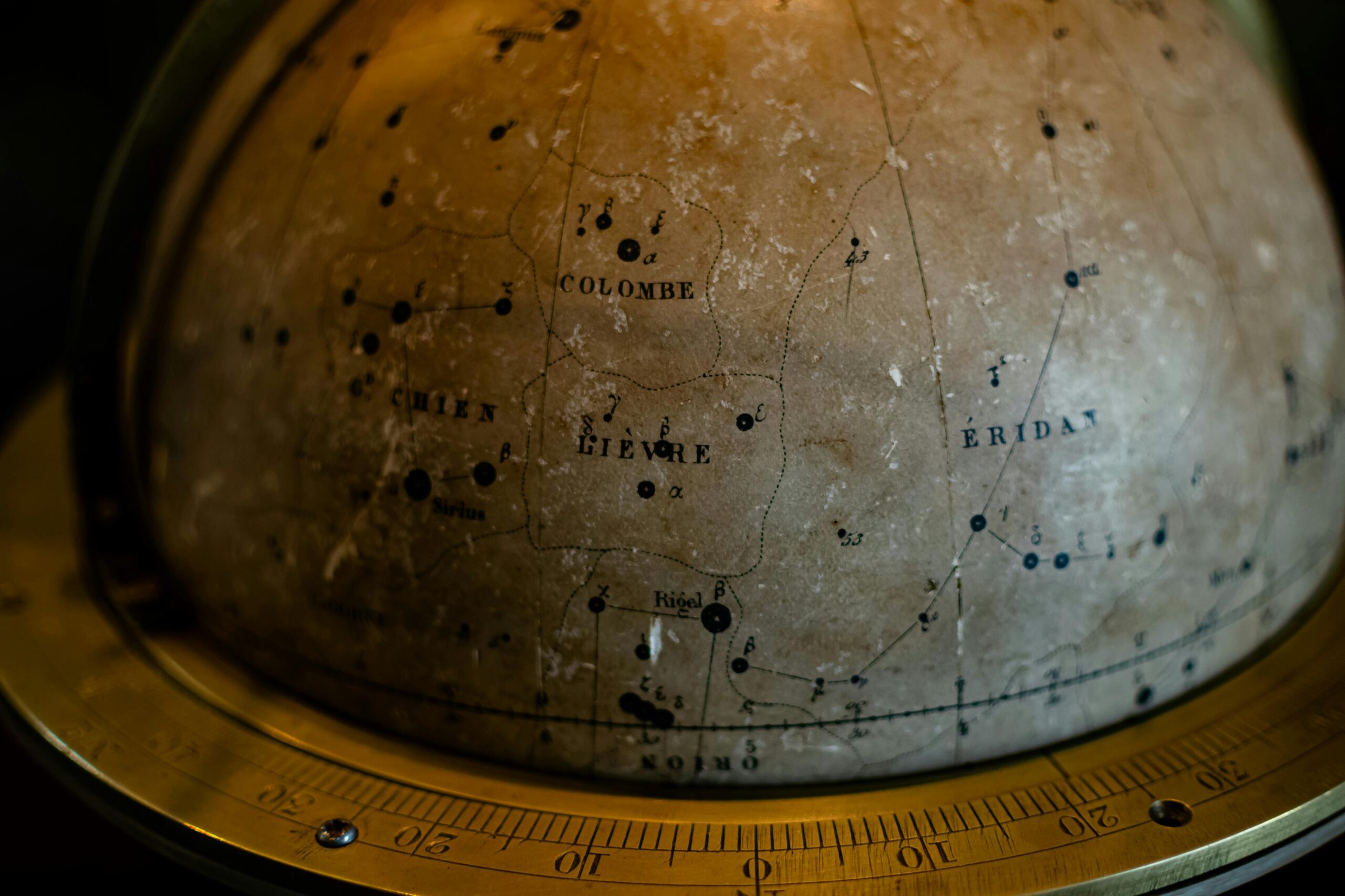
💫 Unlocking Ancient Astronomical Wisdom Today
Modern technology has revolutionized our understanding of ancient astronomical instruments. Advanced imaging, computer modeling, and archaeoastronomy have revealed details that earlier researchers missed. X-ray tomography uncovered hidden inscriptions on the Antikythera Mechanism, while laser scanning has revealed minute alignments in megalithic structures.
These ancient instruments demonstrate that early engineers possessed sophisticated understanding of mathematics, materials science, and celestial mechanics. Their achievements challenge assumptions about linear technological progress and remind us that knowledge can be lost as well as gained.
The practical applications of ancient astronomical knowledge extended beyond academic curiosity. These instruments enabled accurate calendars for agriculture, navigation for trade and exploration, and timekeeping for religious and social coordination. They represented the cutting edge of their civilizations’ technological capabilities.
Legacy in Modern Science and Engineering
Contemporary scientists continue discovering new applications for ancient astronomical knowledge. Traditional navigation techniques using stars are being reconsidered as backup systems for electronic failures. The engineering principles behind megalithic structures inform modern architecture and sustainable building practices.
The interdisciplinary approach required to understand these instruments has fostered collaboration between archaeologists, astronomers, engineers, and historians. This synthesis mirrors the holistic knowledge systems of ancient civilizations where astronomy, religion, mathematics, and engineering were interconnected rather than separated into distinct disciplines.
Educational initiatives worldwide are rediscovering these instruments as powerful teaching tools. Building scale models of armillary spheres, astrolabes, or studying Stonehenge’s alignments provides tangible connections to mathematical and scientific concepts while honoring the ingenuity of our ancestors.
The ancient astronomical instruments stand as testament to human curiosity and ingenuity. From the intricate gears of the Antikythera Mechanism to the towering stones of Stonehenge, these devices reveal that early engineers achieved remarkable precision and sophistication. They remind us that the quest to understand our place in the cosmos is as old as civilization itself, and that innovation often requires looking backward as well as forward. As we continue to explore the universe with increasingly powerful technologies, we honor the legacy of those early stargazers who first measured the heavens with nothing more than stones, bronze, and brilliant minds.