
Sacred geometry bridges ancient wisdom with modern design, revealing profound mathematical patterns in cities and temples that connect humanity with cosmic order. ✨

The Timeless Language of Sacred Proportions 🔺
Throughout human history, civilizations have embedded sacred geometric principles into their most significant structures. From the pyramids of Giza to the urban planning of Washington D.C., these mathematical relationships transcend mere aesthetics—they represent humanity’s attempt to harmonize with universal patterns found in nature, the cosmos, and consciousness itself.
Sacred geometry refers to geometric proportions and patterns that appear repeatedly in nature and that ancient cultures believed held spiritual significance. The golden ratio, Fibonacci sequence, platonic solids, and specific angles like 51.84 degrees weren’t randomly chosen by architects and urban planners. These mathematical relationships were intentionally incorporated to create spaces that resonated with natural harmony and facilitated spiritual elevation.
Ancient Temples: Cosmic Blueprints in Stone 🏛️
Temple architecture across cultures demonstrates remarkable consistency in applying sacred geometric principles. The builders understood that form influences consciousness, and specific proportions could facilitate transcendent experiences.
The Pyramids and the Golden Mean
The Great Pyramid of Giza exemplifies sacred geometry’s precision. Its base perimeter divided by its height equals 2π (pi), encoding the relationship between a circle’s circumference and radius. The pyramid’s slope angle of approximately 51.84 degrees naturally creates the golden ratio (phi, 1.618) when you divide the slant height by half the base length.
This wasn’t accidental. Ancient Egyptian architects possessed sophisticated mathematical knowledge, embedding cosmic proportions into monuments designed to facilitate the pharaoh’s journey to the afterlife. The pyramid’s orientation to cardinal directions with 99.9% accuracy demonstrates their astronomical expertise and desire to align earthly structures with celestial patterns.
Hindu Temples and the Mandala
Hindu temple architecture follows the Vastu Purusha Mandala, a sacred geometric diagram that serves as the architectural blueprint. This mandala divides space into a grid, typically 8×8 or 9×9 squares, with each section corresponding to different deities and cosmic forces. The central square, the Brahmasthana, remains empty, representing the formless divine essence.
The temple’s vertical axis (axis mundi) symbolizes the connection between earth and heaven. The progressively smaller levels of the shikhara (tower) create a mathematical progression that draws the eye—and consciousness—upward. This vertical sacred geometry mirrors the ascending chakras in yogic philosophy, making the temple itself a three-dimensional representation of spiritual ascension.
Buddhist Stupas: Spheres of Enlightenment
Buddhist stupas embody the five elements through geometric forms: a square base (earth), circular dome (water), conical spire (fire), crescent moon (air), and flame-like tip (ether). The Borobudur Temple in Indonesia presents sacred geometry on a monumental scale, with its mandala-shaped plan visible only from above—a design meant for the gods’ perspective, not human viewers.
The temple’s nine platforms represent the stages of enlightenment in Mahayana Buddhism. Walking the approximately 5 kilometers of corridors while circumambulating the structure creates a meditative journey through 1,460 narrative relief panels, demonstrating how sacred geometry organizes not just space but spiritual experience and time.
Gothic Cathedrals: Light Through Mathematical Precision ⛪
Medieval cathedral builders, though separated by centuries and continents from pyramid architects, employed remarkably similar sacred geometric principles. The Gothic cathedral represents one of humanity’s most sophisticated applications of geometry to spiritual architecture.
Chartres Cathedral in France exemplifies this mastery. Its floor plan forms a Latin cross whose proportions follow the golden ratio. The cathedral’s dimensions encode biblical numerology—three for the Trinity, four for the material world (four elements, four directions), twelve for the apostles, and so forth. The rose windows demonstrate perfect radial symmetry with 12-fold and 16-fold divisions, creating mandalas in stained glass.
The pointed Gothic arch isn’t merely stylistic; it’s a structural innovation based on sacred geometry that allowed walls to soar higher while distributing weight more efficiently. This mathematical principle enabled the creation of vast windows that transformed stone buildings into vessels of colored light—light being a central metaphor for divine presence in Christian theology.
Urban Planning: Cities as Sacred Mandalas 🌆
Sacred geometry extends beyond individual buildings to influence entire urban layouts. Ancient and modern city planners have used geometric principles to create spaces that function practically while embodying cosmological worldviews.
Beijing’s Forbidden City: Earthly Mirror of Heaven
The Forbidden City embodies Chinese cosmology through rigorous geometric organization. The entire complex aligns along a north-south axis, with the emperor’s throne positioned at the precise center, representing the earthly counterpart to Polaris, the celestial pivot around which the heavens rotate.
The city’s rectangular layout and its division into inner and outer courts reflect Confucian social hierarchies and Taoist concepts of yin and yang. The number nine appears repeatedly—considered the most auspicious number associated with the emperor—in the 9,999.5 rooms (only heaven could have 10,000) and in the nine bronze creatures adorning roof ridges. This numerical sacred geometry reinforced imperial authority as the mediator between heaven and earth.
Washington D.C.: Masonic Geometry in America’s Capital
Washington D.C.’s layout incorporates sacred geometric patterns often associated with Freemasonry, many of whose founding fathers were members. The city’s street plan, designed by Pierre Charles L’Enfant, features diagonal avenues intersecting a rectangular grid, creating numerous triangular spaces.
The Capitol, White House, and Washington Monument form significant geometric alignments. The Washington Monument—an obelisk, a form with ancient Egyptian sacred geometric origins—stands at 555 feet 5 inches, with the ratio of its height to base width approximating the golden ratio. The pentagonal street patterns and circular focal points throughout the city reflect geometric symbolism associated with enlightenment, divine proportion, and cosmic order.
Brasília: Modernist Sacred Geometry
Brazil’s capital, Brasília, designed by Lúcio Costa and Oscar Niemeyer in the 1950s, demonstrates that sacred geometric principles continue influencing urban planning in the modern era. The city’s airplane or bird-shaped layout isn’t arbitrary—it symbolizes Brazil taking flight into its future while embodying the cross, a powerful symbol in this predominantly Catholic nation.
The monumental axis organizes government buildings along a line that aligns with sunrise on the September equinox. The symmetrical layout reflects modernist ideals of order and rationality while unconsciously echoing ancient traditions of orienting cities according to celestial phenomena. The Cathedral of Brasília, with its hyperboloid structure created by 16 concrete columns, forms a crown reaching skyward, using geometric repetition to create spiritual uplift through mathematical form.
The Mathematical Patterns That Connect Everything 🔢
Several specific geometric patterns appear across cultures and epochs, suggesting universal recognition of certain proportions as particularly harmonious or meaningful.
The Golden Ratio (Phi: 1.618…)
The golden ratio appears throughout nature—in spiral galaxies, nautilus shells, flower petals, and human facial proportions considered beautiful. Ancient architects recognized this proportion and incorporated it into sacred structures. The Parthenon’s facade fits almost perfectly into a golden rectangle. Renaissance artists like Leonardo da Vinci explicitly used the golden ratio in compositions like “The Last Supper” and in studying human proportions (his famous “Vitruvian Man”).
This ratio creates pleasing visual harmony because it reflects growth patterns found throughout nature. When architects use it in sacred or public buildings, they’re subconsciously aligning human-made structures with organic patterns, creating spaces that feel “right” even if viewers don’t consciously recognize why.
The Vesica Piscis: Sacred Intersection
The vesica piscis—formed by two circles of equal radius intersecting so each circle’s center lies on the other’s circumference—generates numerous sacred geometric relationships. This simple form produces the square root of 3, appears in the proportions of Gothic arches, and symbolizes the intersection of different realms (divine and earthly, spiritual and material).
Medieval builders used the vesica piscis as a fundamental design tool, deriving the proportions of entire cathedrals from this basic geometric operation. The fish-like shape also connected to early Christian symbolism, adding layers of meaning to its mathematical elegance.
Platonic Solids: Perfect Three-Dimensional Forms
The five Platonic solids—tetrahedron, cube, octahedron, dodecahedron, and icosahedron—are the only three-dimensional forms where all faces are identical regular polygons. Plato associated each with an element: fire, earth, air, water, and ether (the cosmos itself). These perfect forms influenced architectural elements from domes to decorative details, embodying the belief that perfect geometric forms reflect divine order.
Modern Interpretations and Contemporary Applications 🏗️
Contemporary architects and urban planners continue exploring sacred geometry, sometimes explicitly, other times intuitively rediscovering principles that guided ancient builders.
Frank Lloyd Wright’s designs often incorporated geometric patterns inspired by natural forms. His use of hexagons, circles, and triangular modules created organic architecture that harmonized with surroundings while maintaining mathematical rigor. The Guggenheim Museum’s spiral form echoes the golden spiral found in galaxies and shells, creating an ascending circular path that transforms viewing art into a geometric meditation.
Buckminster Fuller’s geodesic domes apply Platonic solid principles to create structures of maximum strength with minimum materials—sacred geometry serving practical engineering goals. His exploration of “synergetics” sought to discover nature’s coordinate system, essentially rediscovering ancient sacred geometric principles through modern mathematics and materials science.
Today’s sustainable architecture increasingly returns to sacred geometric principles, not for mystical reasons but because these proportions often yield efficient, harmonious structures. Buildings designed using golden ratio proportions, optimal solar orientations following ancient astronomical alignments, and layouts that consider human psychological responses to certain forms—all echo sacred geometric traditions while serving contemporary needs.
The Psychological Impact of Sacred Spaces 🧠
Modern research validates what ancient builders intuitively knew: geometric proportions significantly affect human psychology and physiology. Studies show that environments incorporating natural proportions like the golden ratio produce measurable relaxation responses, reduced stress indicators, and enhanced cognitive function.
The concept of “architectural phenomenology” examines how built spaces affect human experience. Sacred geometric proportions create spaces that feel balanced and harmonious, facilitating the contemplative states these structures were designed to induce. The mathematical relationships encoded in temples and planned cities weren’t just symbolic—they functionally shaped human experience and consciousness.
Neuroscience research suggests that symmetry, certain proportions, and fractal patterns (which appear frequently in sacred architecture) activate pleasure centers in the brain. Our neurological response to these patterns may be hardwired through evolution, as these same patterns signal health, fertility, and order in nature. Sacred geometry works because it speaks a visual language our brains are evolved to understand and appreciate.
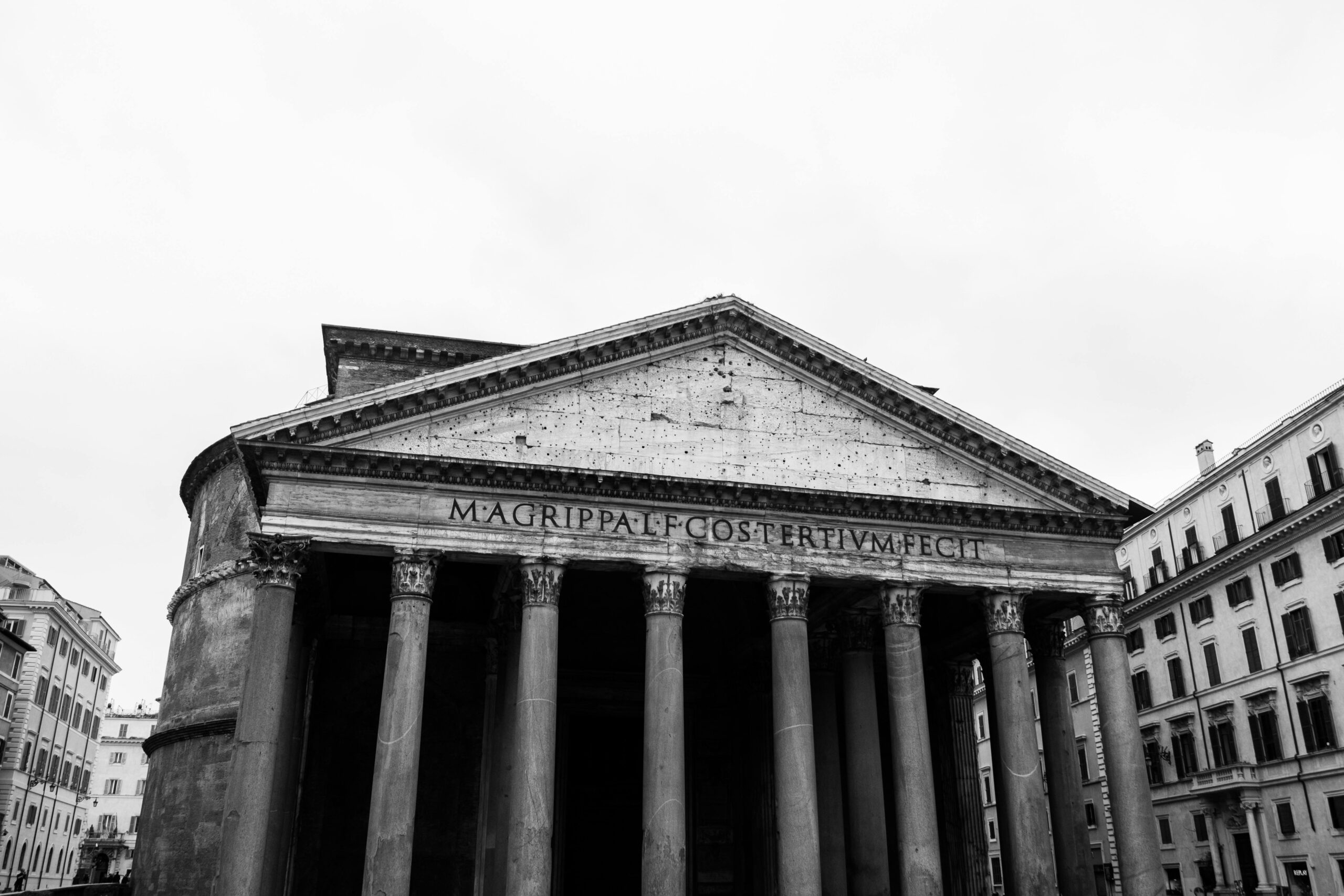
Rediscovering Lost Wisdom in Modern Concrete 🌟
The mystical connection between sacred geometry, urban layouts, and temple architecture reveals a profound truth: humanity has always sought to encode meaning, order, and connection to greater patterns into the spaces we inhabit. Whether building ziggurats in ancient Mesopotamia, Gothic cathedrals in medieval Europe, or modernist government complexes in 20th-century Brazil, architects have intuited or explicitly applied geometric principles that transcend cultural boundaries.
These patterns persist because they work—functionally, aesthetically, and psychologically. They create spaces that feel proportionate, harmonious, and appropriate for their purposes. A temple designed with sacred geometric principles facilitates meditation not through magic but through carefully calibrated proportions that influence perception, acoustics, light, and spatial experience in ways that support contemplative states.
Similarly, cities organized according to geometric principles function more efficiently. The radial patterns of Washington D.C. or Paris create clear focal points and navigation logic. The grid systems of ancient Roman cities or modern Manhattan optimize movement and land use. Sacred geometry often converges with practical planning because both respond to fundamental patterns of how humans move through and perceive space.
As we continue building cities and structures in the 21st century, we face a choice: dismiss sacred geometry as superstitious pseudoscience, or recognize it as an ancient wisdom tradition that empirically discovered principles we’re only now validating through neuroscience, psychology, and advanced mathematics. The most innovative contemporary architects often unconsciously rediscover these ancient principles, suggesting that sacred geometry represents not mystical belief but deep insight into the mathematics of human experience and natural harmony.
The mystical connection isn’t really mystical at all—it’s the recognition that certain mathematical relationships appear throughout nature, resonate with human perception, and create environments that feel fundamentally right. When we build according to these principles, we’re not performing magic; we’re aligning human creations with patterns that govern everything from galaxy formation to plant growth to the proportions we find beautiful in faces and music.
Understanding sacred geometry in urban and temple layouts enriches our appreciation of architectural heritage while offering practical guidance for future design. These ancient principles remind us that buildings and cities are more than functional shelters—they’re environments that shape consciousness, behavior, and well-being in profound ways. By studying how our ancestors encoded cosmic patterns into earthly structures, we learn not just history but timeless principles for creating spaces where humanity can flourish. 🌍