
Sacred geometry merges timeless mathematical principles with aesthetic beauty, offering modern architects a profound toolkit for creating spaces that resonate with both human consciousness and environmental harmony.

🔷 The Timeless Language of Sacred Shapes
Sacred geometry represents far more than abstract mathematical concepts confined to ancient temples and spiritual texts. These fundamental patterns—the golden ratio, Fibonacci sequence, Platonic solids, and the flower of life—form the underlying structure of nature itself. From the spiral of a nautilus shell to the hexagonal perfection of honeycomb structures, these geometric principles govern the physical world around us. Modern architects are rediscovering these ancient design languages, recognizing their potential to create built environments that feel intuitively right to human occupants.
The resurgence of sacred geometry in contemporary architecture isn’t merely aesthetic nostalgia. Scientific research increasingly validates what ancient builders instinctively knew: certain proportions and spatial relationships profoundly affect human psychology, physiology, and well-being. Buildings designed according to these principles often demonstrate superior acoustic properties, optimal natural lighting distribution, and structural efficiency that rivals modern engineering calculations.
✨ The Golden Ratio: Nature’s Perfect Proportion
The golden ratio, approximately 1.618 and represented by the Greek letter phi (φ), appears throughout history as nature’s preferred proportion. This mathematical relationship manifests in Renaissance paintings, classical architecture, and biological growth patterns. Modern architects incorporate this ratio into facade designs, room dimensions, and spatial planning to create inherently pleasing environments.
Contemporary examples showcase the golden ratio’s versatility. The United Nations Secretariat Building in New York incorporates golden rectangle proportions in its design. The CN Tower in Toronto uses phi in its structural elements. These applications aren’t coincidental—they reflect deliberate choices to harness proportions that humans find naturally harmonious. When spaces follow golden ratio principles, occupants report feeling more comfortable and focused, though they may not consciously recognize the mathematical precision underlying their experience.
Practical Applications in Modern Design
Architects today apply the golden ratio across multiple scales. Window placement, ceiling heights, and even furniture arrangements benefit from these proportions. A room measuring 10 feet by 16.18 feet follows the golden rectangle format, creating balanced spatial dynamics. Spiral staircases designed using the golden spiral optimize space while maintaining elegant flow. Even landscape architects use phi to determine planting patterns and pathway curves that guide visitors intuitively through gardens and public spaces.
🌀 The Fibonacci Sequence: Growth Patterns in Built Form
The Fibonacci sequence (0, 1, 1, 2, 3, 5, 8, 13, 21…) closely relates to the golden ratio, with each number approaching phi when divided by its predecessor. This sequence governs growth patterns in plants, animal breeding patterns, and galaxy formations. In architecture, the Fibonacci sequence provides a framework for proportional systems that feel organic and natural.
Modern sustainable architecture particularly benefits from Fibonacci-based designs. Biomimetic buildings that incorporate natural growth patterns often achieve superior energy efficiency. The spiral arrangement of windows or solar panels following Fibonacci numbers can optimize light capture throughout the day. Structural supports spaced according to this sequence distribute loads efficiently while maintaining aesthetic appeal. The Museum of Modern Art in San Francisco and numerous residential projects worldwide demonstrate how Fibonacci principles create visually dynamic yet structurally sound buildings.
🔺 Platonic Solids: The Building Blocks of Reality
The five Platonic solids—tetrahedron, cube, octahedron, dodecahedron, and icosahedron—represent the only perfectly symmetrical three-dimensional forms. Ancient philosophers associated these shapes with the classical elements: fire, earth, air, ether, and water. Contemporary architects use these geometric forms as conceptual frameworks and literal structural elements.
Geodesic domes, popularized by Buckminster Fuller, derive from icosahedral geometry. These structures achieve remarkable strength-to-weight ratios while enclosing maximum volume with minimum surface area. The Eden Project in Cornwall, England, features massive geodesic biomes that demonstrate how Platonic solid principles enable ambitious architectural visions. Similarly, cubic and octahedral geometries inform modular construction systems that offer flexibility, efficiency, and aesthetic coherence.
Geometric Forms in Public Architecture
Museums, libraries, and cultural centers increasingly embrace Platonic solids in their designs. The Louvre Pyramid in Paris represents a perfect example of tetrahedral geometry creating iconic architecture. These forms serve functional purposes—distributing structural loads evenly, facilitating natural ventilation, and creating memorable landmarks that enhance urban identity. The psychological impact shouldn’t be underestimated; humans respond positively to clear geometric forms that provide visual stability and order.
🌸 The Flower of Life: Universal Connection Pattern
The Flower of Life pattern—nineteen overlapping circles arranged in hexagonal symmetry—appears across cultures and millennia. Found in ancient Egyptian temples, Buddhist monasteries, and Renaissance art, this pattern represents interconnection and unity. Modern architects interpret this sacred symbol through floor patterns, facade designs, and structural grids that emphasize relationship and community.
Contemporary applications range from subtle to explicit. Some architects incorporate Flower of Life proportions into building footprints, creating spaces where different functional areas relate harmoniously. Others use the pattern decoratively in flooring, ceiling designs, or exterior cladding. The hexagonal geometry inherent in the Flower of Life offers practical advantages—hexagons tile perfectly without gaps, optimize material usage, and distribute forces efficiently across structures.
🏛️ Historical Precedents Informing Modern Practice
Ancient architects understood sacred geometry intuitively, creating structures that have endured centuries while maintaining their powerful presence. The Great Pyramid of Giza encodes pi and phi in its dimensions. The Parthenon in Athens uses golden ratio proportions throughout its design. Gothic cathedrals employ complex geometric systems to achieve soaring heights and luminous interiors that inspire awe.
These historical precedents offer more than inspiration—they provide proven design strategies. Modern computational tools allow architects to analyze ancient structures, revealing sophisticated geometric relationships that inform contemporary projects. The Pantheon’s perfect dome, with its oculus creating divine lighting effects, teaches principles applicable to modern skylight designs. Medieval cathedral builders’ use of vesica piscis geometry to determine vault proportions remains relevant for creating acoustically optimized performance spaces.
🌍 Sustainable Design Through Sacred Geometry
The intersection of sacred geometry and sustainable architecture produces particularly compelling results. Natural patterns evolved over millions of years to optimize resource usage—biomimetic designs based on these patterns inherit similar efficiencies. Hexagonal structural systems, mirroring honeycomb architecture, minimize material usage while maximizing strength. Spiral forms inspired by nautilus shells create efficient circulation patterns that reduce energy consumption.
Passive solar design benefits significantly from geometric precision. Buildings oriented according to solar geometry and seasonal patterns achieve superior thermal performance. Window placement following golden ratio proportions balances daylighting needs with thermal control. Ventilation systems designed using fractal geometry—another sacred pattern—distribute air more efficiently than conventional rectangular ductwork. These geometric approaches align sustainability goals with aesthetic quality, proving that environmental responsibility and beautiful design aren’t mutually exclusive.
Energy Efficiency Through Mathematical Precision
Specific geometric configurations demonstrably improve building performance. Studies show that buildings with golden ratio window-to-wall ratios achieve optimal natural lighting while minimizing heat loss. Circular or octagonal floor plans reduce exterior surface area relative to interior volume, decreasing energy demands. Roof angles calculated using solar geometry maximize photovoltaic panel efficiency. These measurable benefits make sacred geometry not merely artistic preference but practical engineering strategy.
💫 Psychological and Spiritual Dimensions
Beyond physical performance, sacred geometry influences human psychology and well-being. Neuroscience research reveals that humans process symmetric patterns with less cognitive effort, creating subconscious feelings of comfort. Specific proportions trigger positive emotional responses—spaces designed with golden ratio dimensions correlate with reduced stress levels and improved concentration.
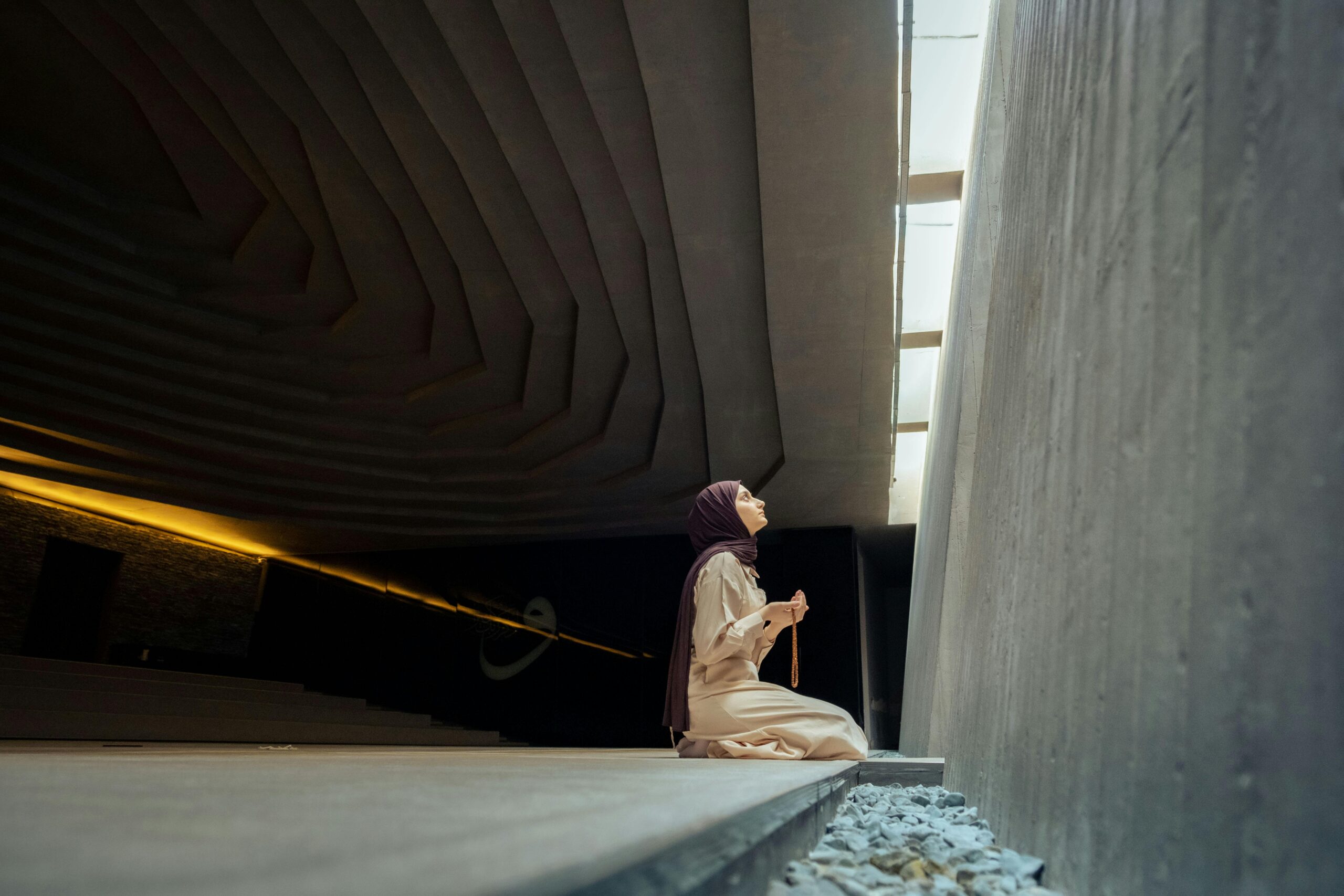
Healthcare architecture particularly benefits from these principles. Hospitals and wellness centers incorporating sacred geometric designs report better patient outcomes. The calming effect of harmonious proportions reduces anxiety in medical settings. Meditation spaces, yoga studios, and spiritual centers naturally gravitate toward these ancient patterns, recognizing their capacity to facilitate contemplative states and psychological balance.
🔧 Digital Tools Enabling Geometric Precision
Contemporary architects access unprecedented tools for implementing sacred geometry. Parametric design software allows precise calculation and visualization of complex geometric relationships. Building Information Modeling (BIM) systems integrate sacred proportions into every design phase, from conceptual sketches through construction documentation. Computational design enables architects to explore geometric variations rapidly, optimizing designs for multiple criteria simultaneously.
Artificial intelligence and machine learning algorithms now analyze how geometric configurations affect human behavior and building performance. These technologies don’t replace human creativity—they amplify it, allowing architects to test sacred geometric principles at scales and complexities previously impossible. Virtual reality lets clients experience proposed geometric spaces before construction, ensuring designs achieve intended effects.
🏗️ Case Studies: Sacred Geometry in Action
The Apple Park campus in Cupertino exemplifies modern sacred geometry application. Its perfect circular form, nearly one mile in circumference, creates a unified campus encouraging collaboration. Interior spaces use golden ratio proportions extensively, while the central courtyard follows ancient principles of sacred space—a contemplative center around which productive activity revolves.
The Bahá’í House of Worship in Chile demonstrates how sacred geometry creates powerful spiritual architecture. Its nine translucent wings, arranged in radial symmetry, embody unity and inclusion. The structure incorporates complex geometric calculations ensuring structural integrity while maintaining ethereal lightness. Natural light filtering through the geometric panels creates ever-changing interior atmospheres that enhance contemplative experience.
Residential projects worldwide increasingly adopt these principles. The Fibonacci House in California uses the famous sequence to determine room sizes and relationships. Each space flows naturally into the next, following the growth pattern inherent in the mathematical sequence. Occupants report exceptional comfort and intuitive navigation through the home.
🌟 Challenges and Criticisms
Sacred geometry in architecture faces legitimate challenges. Critics argue that strict adherence to geometric systems can constrain creativity or produce formulaic designs. Budget constraints sometimes conflict with the precision required for implementing complex geometric relationships. Construction trades unfamiliar with geometric principles may struggle with execution, requiring additional training and oversight.
There’s also risk of superficial application—using sacred geometric patterns as mere decoration without understanding underlying principles. Authentic integration requires architects to deeply comprehend both mathematical relationships and their experiential effects. Additionally, cultural appropriation concerns arise when sacred symbols from specific traditions are used without respect for their origins and meanings.
🔮 The Future of Geometric Architecture
The convergence of ancient wisdom and cutting-edge technology promises exciting architectural evolution. Emerging materials like programmable matter and smart materials could create buildings that physically adapt according to geometric principles. Structures might dynamically adjust proportions based on occupancy patterns or environmental conditions, maintaining optimal sacred geometric relationships throughout changing contexts.
Urban planning increasingly recognizes sacred geometry’s potential at city scale. New developments incorporate geometric principles into street layouts, public space design, and building relationships. These macro-level applications create cohesive urban environments where individual buildings relate harmoniously to the larger whole. Cities designed with geometric intention demonstrate improved walkability, social interaction, and environmental performance.
Biophilic design—connecting building occupants with nature—naturally aligns with sacred geometry. Future architecture will likely integrate these approaches more seamlessly, creating built environments that feel simultaneously innovative and timeless. As climate change demands more sustainable construction practices, the efficiency inherent in natural geometric patterns becomes increasingly valuable.
🌈 Bridging Ancient Wisdom and Modern Innovation
Sacred geometry represents humanity’s longest-running design language—a mathematical poetry connecting us with natural order. Modern architects who embrace these principles don’t retreat into nostalgia but advance toward more holistic, human-centered design. By grounding contemporary innovation in timeless patterns, architecture achieves both functional excellence and spiritual resonance.
The buildings we create shape human experience profoundly. Spaces designed with geometric wisdom support well-being, inspire creativity, and foster connection—to each other, to nature, and to something greater than ourselves. As we face unprecedented environmental and social challenges, architecture must evolve beyond purely functional or commercial concerns. Sacred geometry offers a path forward, building a harmonious future where ancient principles guide modern innovation.
This synthesis of old and new, spiritual and practical, artistic and scientific, represents architecture’s highest calling. Every line drawn, every proportion calculated, every space created becomes an opportunity to honor universal patterns that have guided existence since creation’s beginning. In this way, modern architecture transcends mere shelter, becoming a conscious contribution to the geometric symphony underlying all reality.