
Throughout human history, the stars have whispered stories of cosmic order, divine intention, and spiritual guidance. From ancient civilizations to modern seekers, astronomical alignments have been interpreted as messages from the heavens.

🌌 The Ancient Practice of Reading Celestial Signs
Long before telescopes and satellites, our ancestors looked upward with reverence and curiosity. The night sky served as both calendar and cathedral, providing practical guidance for planting seasons while simultaneously connecting humanity to something greater than themselves. Ancient cultures across every continent developed sophisticated systems for tracking celestial movements, believing these patterns held profound significance.
The Babylonians meticulously recorded planetary positions on clay tablets, creating the foundation for modern astronomy. Egyptian priests aligned the pyramids with remarkable precision to stellar configurations, particularly Orion’s Belt and the star Sirius. Meanwhile, Mayan astronomers calculated Venus cycles with accuracy that rivals contemporary measurements, integrating these observations into their sacred calendars and religious ceremonies.
These weren’t merely scientific endeavors. For ancient peoples, astronomical alignment represented a tangible connection between earthly existence and divine will. When planets gathered in unusual configurations or eclipses darkened the sun, these events were interpreted as omens, warnings, or blessings from the gods.
Sacred Architecture and Stellar Correspondence
Perhaps nowhere is the relationship between astronomical alignment and divine messages more evident than in sacred architecture. Structures worldwide demonstrate intentional orientation toward specific celestial phenomena, suggesting builders believed these alignments channeled spiritual energy or cosmic wisdom.
Stonehenge remains one of history’s most enigmatic examples. During the summer solstice, the sun rises directly above the Heel Stone, casting light through the monument’s center. This precise alignment, achieved thousands of years ago without modern technology, indicates sophisticated astronomical knowledge and suggests ceremonial significance tied to solar cycles.
The Temple of Karnak in Egypt features an axis aligned with the winter solstice sunset. On this sacred day, sunlight penetrates the temple’s entire length, illuminating the innermost sanctuary. Ancient Egyptians interpreted this annual event as the sun god Ra entering his earthly dwelling, a divine visitation made possible through architectural-astronomical harmony.
Indigenous Wisdom and Star Knowledge
Indigenous cultures maintained rich traditions of astronomical observation interwoven with spiritual understanding. Native American medicine wheels align with solstices and equinoxes, serving as both calendars and ceremonial spaces. Aboriginal Australians developed complex star maps encoding not just navigational information but creation stories, law, and moral teachings.
The Inca civilization oriented their capital, Cusco, according to astronomical principles. Sight lines from the Temple of the Sun pointed toward specific horizon positions where celestial bodies rose during significant dates. These alignments weren’t random aesthetic choices but deliberate attempts to harmonize human civilization with cosmic order.
Modern Interpretations of Celestial Messages ✨
Contemporary interest in astronomical alignment as divine communication hasn’t diminished—it has evolved. Astrology remains widely practiced, with millions consulting birth charts, planetary transits, and celestial configurations for guidance. While skeptics dismiss these practices as pseudoscience, practitioners argue they’re tapping into ancient wisdom about cosmic interconnection.
The rise of digital technology has democratized access to astronomical information. Smartphone applications now allow anyone to identify constellations, track planetary movements, and receive notifications about significant celestial events. This technological accessibility has sparked renewed interest in how celestial patterns might inform spiritual understanding.
Some seekers interpret astronomical alignments through religious frameworks. Christians might see celestial signs as fulfillment of biblical prophecy, particularly passages referencing stars and heavenly phenomena. The Star of Bethlehem remains subject to astronomical investigation, with theories proposing planetary conjunctions or comets as natural explanations for this divine signpost.
The Convergence of Science and Spirituality
Interestingly, modern physics has introduced concepts that blur boundaries between material and metaphysical. Quantum entanglement demonstrates that particles separated by vast distances can remain mysteriously connected. The fine-tuning of universal constants—precise values necessary for life to exist—has prompted some scientists to consider anthropic principles or even intelligent design.
These scientific discoveries don’t prove divine messages in astronomical alignments, but they’ve created intellectual space where such questions feel less absurd. If consciousness plays a role in quantum mechanics, as some interpretations suggest, perhaps awareness and cosmic structure share deeper connections than materialist philosophy acknowledges.
🔭 Significant Alignments Throughout History
Certain astronomical events have coincided with historically pivotal moments, fueling speculation about celestial influence on human affairs. Whether these correlations represent divine orchestration, psychological impact, or mere coincidence remains debated, but the patterns are undeniably intriguing.
The Great Conjunction of Jupiter and Saturn occurs approximately every 20 years, but their extremely close approach happens far less frequently. The 1623 conjunction was visible during a period of intense religious conflict in Europe. The December 2020 conjunction, closest in centuries, coincided with global pandemic and widespread social transformation.
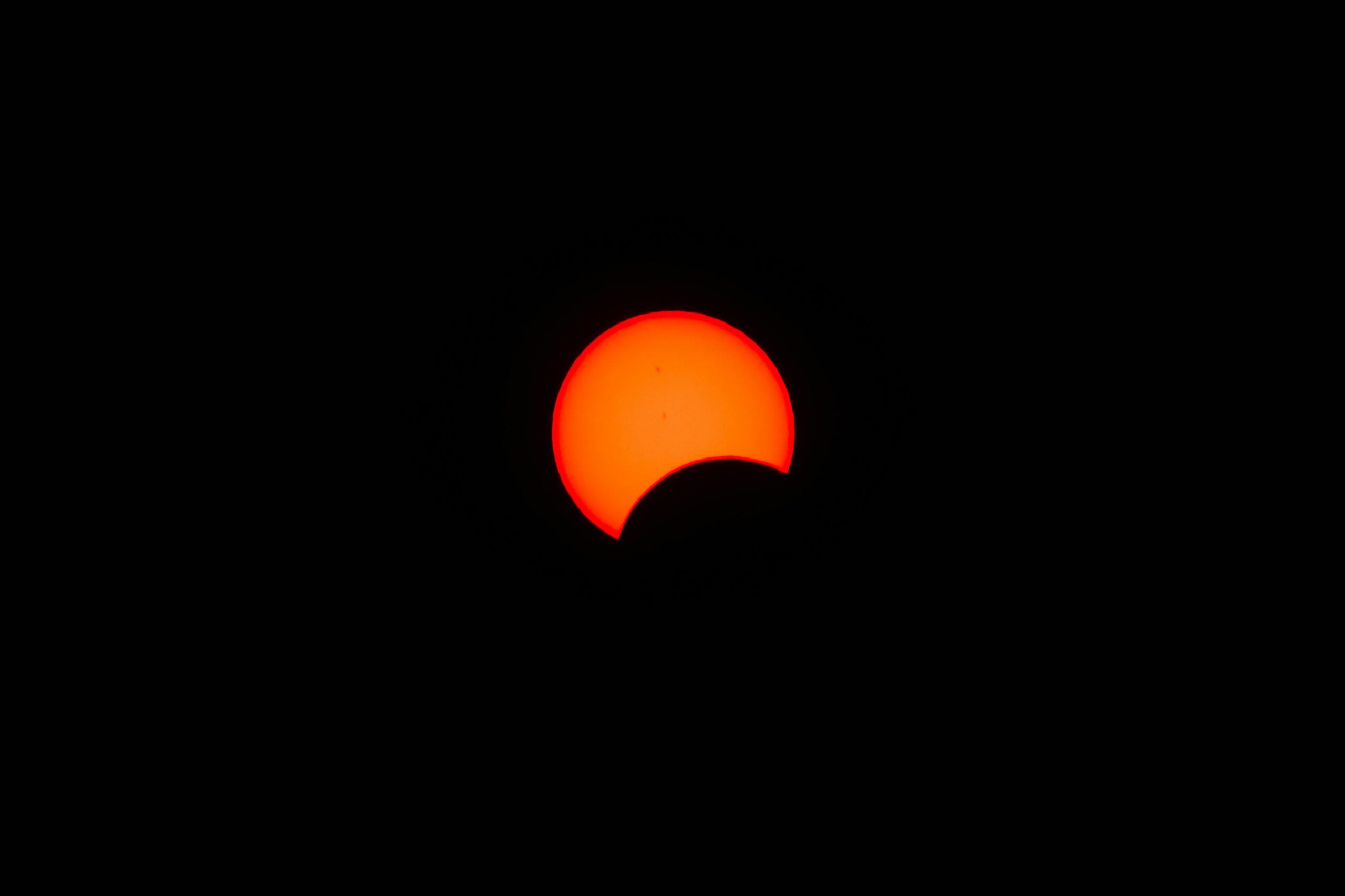
Solar eclipses have historically been interpreted as portentous signs. The eclipse that darkened the sky during the crucifixion of Jesus, mentioned in Gospel accounts, has been subject to astronomical research. While the exact date of the crucifixion remains uncertain, some researchers have identified plausible eclipse dates that align with historical timeframes.
Blood Moons and Prophetic Interpretation
Lunar eclipses, particularly total eclipses that turn the moon reddish (blood moons), have attracted prophetic attention. The tetrad of four consecutive total lunar eclipses in 2014-2015, all occurring on Jewish holy days, sparked considerable discussion in religious communities about potential divine significance.
Proponents pointed to historical patterns where similar tetrads coincided with momentous events in Jewish history. Skeptics countered that lunar eclipses follow predictable mathematical patterns unrelated to human events, and that selective memory emphasizes hits while ignoring misses.
Decoding the Language of the Cosmos
If astronomical alignments do convey divine messages, how might we interpret them? Different traditions offer varying hermeneutical approaches, from precise astrological calculations to intuitive spiritual discernment.
Astrological interpretation assigns meanings to planetary positions, aspects (angular relationships between celestial bodies), and their movement through zodiacal signs. A conjunction might represent new beginnings or intensified energy, while an opposition could indicate tension requiring resolution. Transits of outer planets are thought to trigger collective shifts affecting entire generations.
Religious interpretation often looks for fulfillment of textual prophecies. Biblical passages mentioning celestial signs—such as Joel’s prophecy about the sun turning to darkness and the moon to blood—are examined in light of actual astronomical phenomena. When contemporary events align with both scriptural prediction and celestial occurrence, believers may perceive divine confirmation.
Personal Revelation Through Stellar Observation
Beyond systematic interpretation, many individuals report personal spiritual experiences triggered by astronomical observation. Gazing at the Milky Way in a dark-sky location, witnessing an unexpected meteor, or observing planetary conjunction can evoke profound feelings of connection, insignificance, and wonder simultaneously.
These experiences, while subjective, shouldn’t be dismissed as mere emotion. Throughout history, encounters with the sublime—including celestial beauty—have catalyzed spiritual awakening. If divine communication occurs not only through propositional statements but through experiential encounter, the heavens certainly possess capacity to facilitate such meetings.
⚖️ Critical Thinking and Discernment
Enthusiasm for celestial messages must be balanced with critical thinking. History contains countless failed predictions based on astronomical events. The approach of Halley’s Comet in 1910 sparked panic about poisonous gases, proving groundless. Planetary alignments predicted to cause earthquakes or pole shifts repeatedly fail to manifest.
Confirmation bias—the tendency to notice evidence supporting existing beliefs while ignoring contradictory information—affects interpretation of astronomical signs. Someone expecting divine judgment might perceive threatening significance in celestial events that others view neutrally. Pattern recognition, an evolutionary advantage that helped ancestors survive, can misfire by detecting meaningful patterns where none exist.
Nevertheless, skepticism shouldn’t automatically dismiss all claims of cosmic significance. The universe demonstrates remarkable order, from atomic structure to galactic distribution. Whether this order reflects conscious design or natural law, it undeniably exists. The question remains whether this order communicates intentional messages or simply is.
Practical Applications for Modern Seekers 🌟
For those drawn to exploring astronomical alignment as potential divine communication, several practices can deepen engagement while maintaining healthy discernment.
Regular celestial observation develops familiarity with natural patterns. Understanding how planets actually move, what causes eclipses, and when meteor showers occur prevents mistaking ordinary phenomena for extraordinary signs. Paradoxically, deeper astronomical knowledge often enhances rather than diminishes spiritual appreciation for cosmic wonder.
Keeping a journal documenting both celestial events and personal circumstances allows pattern recognition over time. If significant life changes consistently correlate with particular astronomical configurations, this provides personal evidence worth considering, even if not universally applicable.
Community and Shared Interpretation
Engaging with communities—whether religious congregations, astrological groups, or astronomy clubs—provides multiple perspectives. Shared interpretation guards against idiosyncratic readings while exposing individuals to diverse viewpoints. However, communities can also reinforce collective biases, so maintaining intellectual independence remains important.
Combining ancient wisdom with modern science offers balanced approach. Studying how ancestral cultures interpreted celestial phenomena provides historical context, while contemporary astronomy ensures accurate understanding of actual cosmic mechanics. This integration honors tradition without sacrificing intellectual integrity.
The Intersection of Faith and Cosmos
For many believers, astronomical alignment doesn’t compete with religious faith but complements it. If God created the universe, celestial mechanics represent divine handiwork. Precise planetary orbits, gravitational constants enabling stable solar systems, and cosmic conditions permitting life might themselves constitute messages—declarations of intentional design rather than random chance.
The Psalmist proclaimed “the heavens declare the glory of God,” expressing ancient conviction that celestial realm reveals divine attributes. This perspective doesn’t require believing specific alignments predict future events, but rather that cosmic order generally points toward transcendent intelligence and purpose.
Some theologians distinguish between general revelation (God’s self-disclosure through nature, accessible to all) and special revelation (specific communication through scripture or prophets). Under this framework, astronomical phenomena might offer general revelation—inspiring awe and suggesting divine existence—without necessarily providing specific predictive messages.
🌠 The Future of Celestial Interpretation
As humanity’s astronomical capabilities expand, our relationship with celestial phenomena continues evolving. Space telescopes reveal cosmic wonders invisible to ancient observers. We’ve detected gravitational waves, photographed black holes, and discovered thousands of exoplanets. Each discovery raises new questions about cosmic significance and potential messages.
Will discovering life on other worlds challenge religious cosmologies or enrich them? If we detect technosignatures indicating advanced civilizations, how might this affect interpretations of divine communication through astronomical means? These questions, once purely speculative, edge toward potential empirical investigation.
Meanwhile, light pollution increasingly separates urban populations from direct celestial observation. Most humans now live under skies where only the brightest stars penetrate artificial glow. This disconnection from cosmic patterns may impoverish spiritual imagination, severing experiential links that connected ancestors to questions of meaning and transcendence.
Embracing Mystery While Seeking Understanding
Perhaps the most balanced approach combines humble seeking with acceptance of mystery. The universe clearly operates according to discoverable principles—gravity, electromagnetism, thermodynamics. Yet consciousness, meaning, and purpose remain elusive, potentially irreducible to purely physical explanation.
Astronomical alignments might convey divine messages, or they might simply be. Both possibilities invite wonder. If celestial mechanics follow deterministic laws without intentional communication, the elegance of these laws itself inspires awe. If patterns do carry purposeful meaning, paying attention becomes spiritual practice.
The cosmos invites interpretation while resisting definitive conclusions. This tension needn’t frustrate but can instead cultivate intellectual humility and spiritual openness—qualities arguably more valuable than certain answers.
Your Personal Journey With the Stars 💫
Whether you approach astronomical alignment through religious devotion, astrological practice, scientific curiosity, or contemplative spirituality, the journey offers enrichment. Begin simply: spend time under the night sky. Learn to identify major constellations. Track the moon through its phases. Notice how Venus shines as evening or morning star.
As familiarity grows, patterns emerge. You’ll anticipate annual meteor showers, recognize planetary configurations, understand eclipse cycles. This knowledge doesn’t diminish wonder—it deepens appreciation for cosmic choreography unfolding with mathematical precision.
Remain open to both natural explanation and numinous experience. Science and spirituality need not oppose each other. The same celestial event can simultaneously be explained by gravitational physics and experienced as spiritually meaningful. Both truths can coexist.
Ultimately, whether the universe communicates divine messages through astronomical alignment may be less important than the seeking itself. The questions we ask, the wonder we experience, and the connections we draw between cosmos and consciousness shape our humanity. Looking upward, we confront our smallness and our significance, our isolation and our belonging, our temporariness and our participation in something eternal.
The stars continue their ancient dance, indifferent to our interpretations yet endlessly fascinating. They illuminated questions for our ancestors and will shine long after we’re gone. In the meantime, they invite contemplation, inspire stories, and perhaps—just perhaps—whisper secrets about the universe and our place within it.